
Location

Banpo Village, 6 km away from Xian City, Shannxi Province, China
Reasons to visit
The largest and best-preserved Neolithic Yangshao cultural village sites in China; China's first neolithic site museum; National key cultural relics protection units
Opening Hours
- 08:00 - 18:00 (Mar. - Nov.)
- 08:00 - 17:30 (Dec. - next Feb.)
Banpo (Chinese: 半坡, Bànpō) sites is the largest and best-preserved Neolithic Yangshao cultural village sites at China's Yellow River basin. Banpo Neolithic Village Museum is built around a historical site consisting of the remains of a 6,000 year-old village once home to a matriarchal clan community. It is the first Prehistoric site museum in China, located in Banpo Village, 6 km away from Xian city,. This ruin is six kilometers east of Xian. This excavated site of a village dates back to 4500 BC and was discovered in 1953.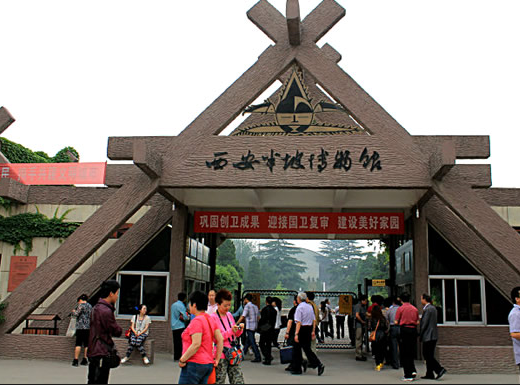
Excavation of Banpo Sites
Banpo Sites belong to Neolithic Yangshao culture. It was discovered in 1953. From 1954 to 1957,Institute of Archaeology of Chinese Academy of Sciences had excavated for 5 times, with a total area of 50,000 square meters, exposing an area of 10,000 square meters. The sites can be dated back to 4800 BC - 4300 years ago. Banpo Neolithic Village Museum was built in 1958 on the ruins.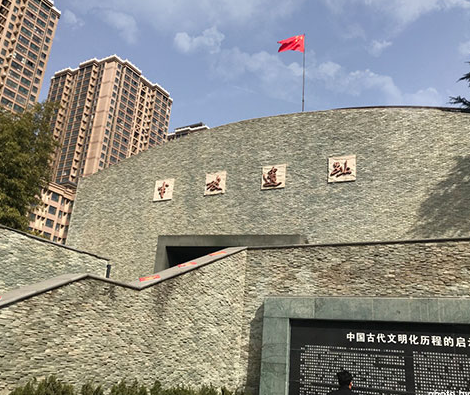
Banpo Neolithic Village Museum
Banpo Neolithic Village Museum’s display and exhibition area is about 4,500 square meters. It has 3 parts: Cultural Relics Exhibition Hall, the hall of the Banpo Sites and Auxiliary Exhibition Hall.
【The Site Hall】 the Site Hall is about 3,000 square meters including the residential, pottery making and buri
al section. The residential section is the main part of the site. There are huts, kilns and tombs. The site gives us an impression of the aboriginal village and the living condition of the forefathers, reflecting the civilization of that period of time.
【Cultural Relics Exhibition】 The cultural relics exhibition is consisted of the Hall 1 and Hall 2. The two rooms are displaying the production tools and household items. Site hall is 3,000 square meters, which is a part of the original village.
【Auxiliary Exhibition Hall】 there are the Hall 3 and Hall 4, which mainly holds special subject exhibition about prehistory.
【Banpo Matriarchy Village】It is the extension of Banpo Museum. It takes protection of the ruins as the prerequisite, according to archaeological data, moved the the precious heritage from underground on the ground, three-dimensional reappearing the human matriarchal society.
Banpo Yangshao Culture
The distinct culture of these villagers was known as Yangshao culture. This kind of culture emphasizes the importance of women. So, there are more female tombs and graves here than male, and the women graves contain more objects and valuables than their male counterparts do.
From this museum, we have got some information of that age. The living section of Banpo Village occupied an area of 30,000 square meters. It was surrounded by a moat to protect the village against wild animals and floods. The largest among the remains of the 46 houses, located in the centre of the living area is possibly a meeting hall. There are cellars to store grain and tools outside the houses, and they illustrate the equal distribution and communal features of the society. It is a fascinating peek at the birth of civilization.
Today, the site itself is pretty flat and uninspiring. It takes a lot of imagination to picture how this place used to be and the Disney-style "Yangshao Village" which has been reconstructed at the site makes this area less appealing.
Banpo Neolithic Village Museum Travel Guide
【Collection Amount】 30000 items
【National Treasure】 A basin with human face and fish patterns
【Best Time to Visit】 All year round.
【How to get There】
1.Take bus to Banpo Neolithic Village Museum Station (Ban Po Bo Wu Guan)
2.Taxi: it is about 10 km from the Xian Railway Station, and driving for about 20 min.
Archaeological Discovery and Site Layout
Banpo Site is located on the east bank of the Chan River in the eastern suburbs of Xi’an. It dates back about 6,000 to 6,700 years and represents a matriarchal clan settlement from the Neolithic Yangshao Culture period (4800 BC – 4300 BC). First discovered in 1952 after finding fragments of painted pottery, it underwent five large-scale excavations between 1954 and 1957, exposing an area of 10,000 square meters. Archaeologists unearthed defensive moats, house foundations, tombs, and pottery kilns, as well as thousands of stone tools and artifacts.
The site layout reflects the ecological wisdom of prehistoric people — the settlement was built “with its back to the slope and facing the river,” making it warm in winter and cool in summer. The residential area sits at the center, surrounded by a 6–8 meter-wide defensive moat, which protected villagers from floods and wild animals. The cemetery is located in the north, and the pottery-making zone lies to the east, clearly separating living, working, and burial spaces.
Early Civilization and Matriarchal Society
As one of the earliest examples of organized communities in the Yellow River Basin, Banpo reveals the birth of early agricultural civilization in China. The Banpo people engaged in millet farming, fishing, hunting, and pottery-making. During this period, women played a dominant role in economic and social life, marking the height of a matriarchal society.
Evidence such as charred hemlock pollen, subtropical animal bones, and pottery with fish motifs shows that Banpo experienced a warm and humid “Yangshao Climate Period.” These findings help scholars reconstruct the environmental background and cultural evolution of prehistoric China.
Banpo Museum and Exhibition Highlights
Established in 1958, the Banpo Museum was the first prehistoric site museum in China. Though some excavated areas have been refilled for preservation, the museum still provides invaluable physical materials for the study of Chinese civilization’s origins.
Recommended Visiting Route
Cultural Relics Exhibition Halls (Halls 1 & 2)
Begin your visit with the artifact galleries displaying tools, utensils, and artworks excavated from the Banpo and Jiangzhai sites, including stone axes, adzes, painted pottery bowls, and pointed-bottom jars. Twenty-two engraved symbols found on the pottery are believed to be the earliest prototypes of Chinese characters.
Site Exhibition Hall
Covering about 3,000 square meters, this is the museum’s core area. Visitors can view 45 house foundations, over 200 cellars, six pottery kilns, and the outline of the defensive moat, which vividly recreate the daily life and village structure of the Banpo ancestors. A panoramic viewing platform allows you to overlook the entire site and understand the spatial logic of matriarchal settlements.
Auxiliary Exhibition Halls (Halls 3 & 4)
These halls host thematic exhibitions focusing on prehistoric studies, social development, and ancient handicrafts, offering deeper insight into the Banpo culture’s background and legacy.
Must-See Artifacts and Interactive Experiences
Human Face and Fish Pattern Basin
The most famous treasure of the museum, this painted pottery basin features mysterious designs combining human and fish motifs, symbolizing fertility and the totem beliefs of the Banpo people. Its imagery even inspired the design of Beijing 2008 Olympic mascots (Fuwa).
Pointed-Bottom Jar & Bone Needle
The pointed-bottom jar, used as a water-fetching vessel, cleverly tilts underwater and stands upright when filled — a testament to early mechanical understanding. The bone needle, with an eye just 0.3 mm wide, was crafted without metal tools and remains an archaeological mystery. Visitors can operate models demonstrating their ingenious principles.
Fire-Making Experience Zone
In this interactive area, staff perform bow-drill fire-making demonstrations, and guests are invited to try primitive survival techniques themselves.
“Banpo Girl” Sculpture
The courtyard’s symbolic statue depicts a young woman crouching to fetch water with a pointed-bottom jar — a perfect photo opportunity for visitors.
Visitor Tips
Footwear: Wear non-slip sports shoes — the site retains uneven original soil layers.
Sun & Insect Protection: Bring a hat, sunscreen, and mosquito repellent, especially in summer.
Food & Water: The museum has no restaurant; small snacks and bottled water are recommended.
Respect the Site: Avoid touching soil layers or artifact replicas; keep the environment clean.
Tickets and Transportation
Admission:
Peak Season (Mar 1 – Nov 30): ¥55/person
Off Season (Dec 1 – Feb end): ¥40/person
How to Get There:
Metro: Take Line 1 to Banpo Station (Exit A or C), then walk about 10 minutes.
Bus: Routes 105 or 406 to Banpo Museum Station (半坡博物馆站).
Taxi: Around 20 minutes (10 km) from Xi’an Railway Station.
Nearby Attractions
Banpo International Art District: Just a short walk from the museum, this former textile factory has been transformed into a creative cultural park. With graffiti walls, retro locomotives, cafés, and studios, it offers a vibrant artistic contrast to the ancient Banpo site — ideal for casual strolling and photography.