
Location
Located in the northern part of Burqin County, Altay Prefecture, Xinjiang Uygur Autonomous Region
Reasons to visit
China's deepest freshwater lake; the most beautiful lake in China.
Opening Hours
- High season: May 1 – October 15
- Off season: October 16 – April 30
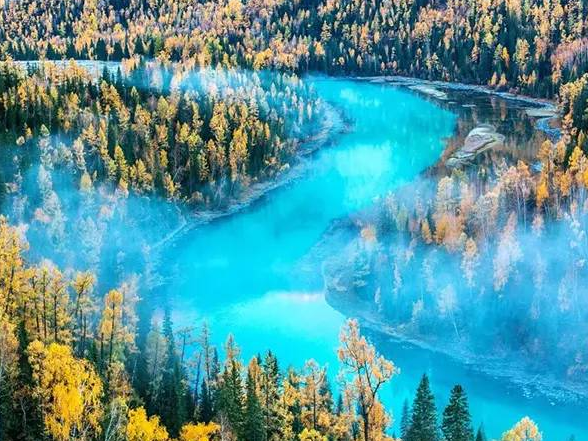
Kanas is a Mongolian word meaning "beautiful and mysterious lake". Kanas Lake(喀纳斯湖) is China's deepest freshwater lake famous for its picturesque view, and home to 798 species of plants and 117 varieties of birds. Kanas is a comprehensive scenic spot area integrating glaciers, lakes, forests, grasslands, pastures, rivers, ethnic customs and rare animals and plants, which is known as the "Oriental Switzerland, photographer's paradise". Embraced by snow-capped mountains and dense forest, Kanas Lake in Burqin takes on different colors in different seasons.
Basic Information of Kanas Lake
Kanas Lake is located in the northern part of Burqin County, Altay Prefecture, Xinjiang Uygur Autonomous Region, 150 kilometers away from Burqin County. The lake water comes from the melting water of the mountains such as Kuitun Peak and Friendship Peak and the local precipitation. The lake is 1374 meters above sea level, with an area of 45.73 km2, the lake depth of 188.5 meters and a water storage capacity of 5.38 billion cubic meters. Kanas Lake in Burqin is the deepest moraine-dammed lake in China.
Kanas Lake Comprehensive Natural Reserve, a golden zone bordering four countries of Kazakhstan, Russia, Mongolia and China, is the only drainage basin of the Arctic Ocean in China. In Xinjiang, the reserve, minimally influenced by mankind, preserves the completeness of a primitive state with the largest number of tree species of coniferous forest and wildlife species. Abundant species of insects, fish, amphibians, reptiles, birds and beasts live here. In 2002, Kanas Lake in Burqin was approved as the protection site of World Cultural and Natural Heritage.
Geography and Scenic Beauty
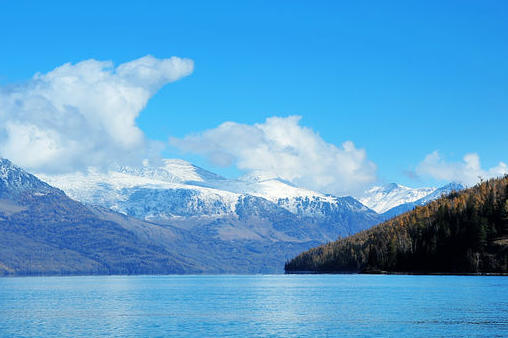
Kanas Lake is tucked beneath the Friendship Peak of the Altay Mountains. On a map of China, the lake is located near the tip of the “rooster tail”, a position that surprises many first-time visitors with its breathtaking beauty. Originally part of the Kanas River, glacial activity blocked the river’s flow, forming the lake. Surrounding mountains are capped with snow, and their slopes are covered in dense forests and colorful wildflowers.
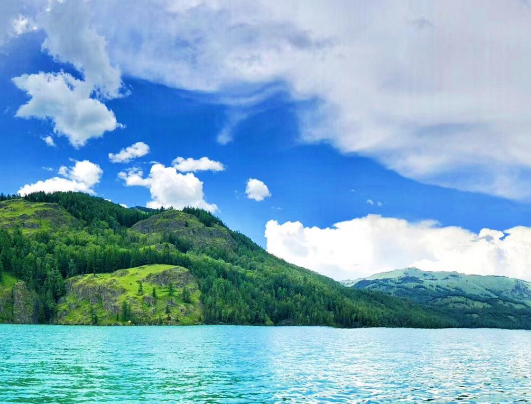
The lake is also famous as the “color-changing lake”, as its water can shift between pure blue, emerald green, turquoise, or gray-white depending on weather conditions. Sometimes multiple colors appear simultaneously, enhancing its mystical charm. Sunrise and sunset are particularly magical, when the light and mist create an ethereal atmosphere.
Morning: Before dawn, the lake mirrors soft clouds in the sky, while surrounding mountains are shrouded in mist. The lake surface is calm, reflecting even the tiniest ripples. Occasionally, birds flying across the lake are mirrored perfectly, giving the impression of a harmonious dance of nature.
Evening: At sunset, the lake transforms. Even in summer, nighttime temperatures can drop below -10°C. Gentle snow may fall on the mountain slopes, while the lake itself remains clear. The surrounding forest gradually turns white with snow, and a thin mist rises from the lake surface as night descends, merging the water and sky into a dreamy, deep-blue scene.
Best Time to Visit Kanas Lake
The best time to visit the Kanas Lake is in June and September. In June, flowers bloom and trees turn green and everything are full of vigor. The flowers are at their best and Kanas lookes like an ocean of flowers. Entering September, Kanas entered the pure golden season. This is also the best time for photography.
Winter operation period (October 16 – April 30) is an ideal choice for visitors with limited budgets. Kanas does not close the mountain in winter, and the scenic spot is open for business. Visitors will see the fairyland-like original snowy scenery. Kanas will also host five major themes activities, namely, Snow and Ice Festival, Snow Carnival, Winter Ice and Snow Photography Season, Snowboard Invitational, Snow Sculpture Invitational.
Observation Deck – Guan Yu Ting (Fish-Viewing Pavilion)
The Fish-Viewing Pavilion is situated at an altitude of 2,030 meters on Halakat Peak (meaning “Camel Peak” in Mongolian), about 600 meters above the lake. This is the best location to spot the legendary lake monster, which is why the pavilion earned its name.
There are two ways to reach the pavilion:
-
Bus: Visitors can take a bus to the base of the mountain and then hike the remaining trail.
-
Hiking: A stone staircase near the lake’s outlet allows adventurous travelers to trek to the pavilion on foot.
From the pavilion, you can enjoy a panoramic view of Kanas Lake, covering nearly three-quarters of its surface. The vantage point is ideal for photography and appreciating the lake’s full scale.
Tuva Village
Adjacent to Kanas Lake is Tuva Village, inhabited by the Tuva people. Local legends suggest that the Tuva are descendants of elderly or injured soldiers left behind during Genghis Khan’s western campaigns.
The Tuva maintain unique customs and language, which belong to the Altai Turkic language family and are closely related to Kazakh. They still wear traditional clothing and sustain their livelihood through pastoralism, fishing, and gathering. Spiritual beliefs center around reverence for heaven, water, and mountains, harmoniously coexisting with the lake’s natural environment.
The Kanas Lake Monster Legend
Apart from its natural beauty, Kanas Lake is famous for the legendary “lake monster”. Reports of mysterious creatures in the lake date back centuries. Observers at dawn or dusk have claimed to see a strange animal emerging from the water, sometimes estimated to be up to 10 meters long.
Local herders recount incidents where livestock disappeared near the lake, leaving only footprints on solid ground. Despite multiple scientific expeditions attempting to uncover the truth by setting traps or using bait, no definitive evidence has been found. However, explorers have documented giant predatory fish, specifically the Taimen (Hucho taimen), which can reach lengths of over 10 meters. Many speculate that these massive fish may be the source of the lake monster tales.
Flora and Fauna
Kanas Lake is surrounded by snow-capped mountains and dense forests, hosting species usually found only in Siberia. The nature reserve contains:
-
798 plant species, including 30 rare varieties
-
34 mammal species
-
75 bird species
-
124 insect species
-
8 fish species
-
7 amphibian species
The reserve’s forests are home to Siberian larch, spruce, fir, and birch, as well as animals such as snow leopards, stone martens, silver foxes, and Altai frogs. The area remains a scientific treasure trove, preserving its pristine ecosystems with minimal human interference.
Travel Tips
-
Temperature and Clothing
Kanas Lake experiences large day-night temperature differences. Early morning temperatures can be around -5°C, while midday sun can reach 27°C in summer. Visitors should wear layered clothing, including down jackets and sweaters for sunrise excursions.
-
Sun Protection and Hydration
Xinjiang has strong UV radiation and a dry climate. Sunscreen, hats, and sufficient water are essential. Even in summer, long pants and jackets are recommended.
-
Winter and Autumn Travel
During colder months, be prepared for wind, snow, and sub-zero temperatures, particularly at high altitudes. Photographers should bring warm gloves, insulated gear, and tripod equipment.
-
Photography
Dawn and dusk are the best times to capture the lake’s mystical colors, reflections, and misty atmosphere. Wide-angle lenses are ideal for panoramas, while telephoto lenses can capture wildlife and distant landscapes.