
Location

Famen Town, Fufeng County, Baoji City, Shannxi Province, China
Reasons to visit
A famous Buddhist holy land to visit in China
Opening Hours
- 8:30-19:00 (Mar. to Dec.)
- 9:00-18:00 (Dec. to next Fec.)
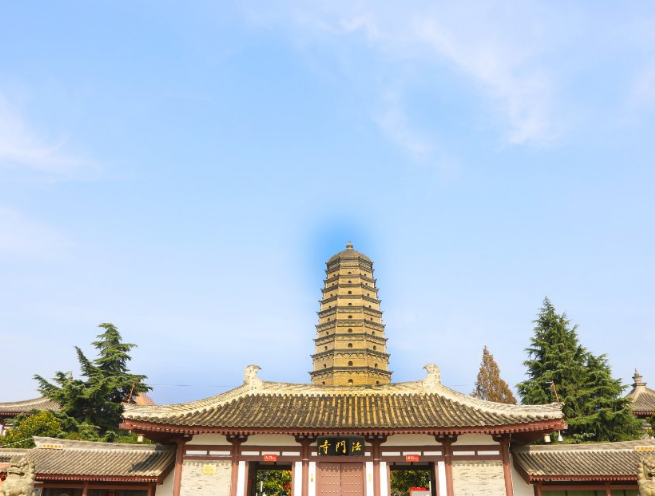
Famen Temple is located in Famen town, 120 km west of Xian. From 5-12 May 1987, after the opening of underground palace, four relics claimed to be directly related to Buddha were found. Thereafter, Famen Temple became Buddhist pilgrimage.
This temple is famous for discovery the fingers bones of Sakyamuni. And historical records reveal that eight emperors of the Tang Dynasty once welcomed the finger bones of Buddha to the palace and donated a large number of treasures to the underground palace of the temple.
History and Development
Origin and Early Development
Famen Temple was first built during the reign of Emperor Huan and Emperor Ling of the Eastern Han Dynasty (147–180 AD). It was originally named Ayuwang Temple (King Ashoka Temple), as legend says that Emperor Ashoka of India divided the relics of the Buddha and sent them across the world to be enshrined in pagodas, with Famen Temple being one of them. In 583 AD, Emperor Wen of the Sui Dynasty renamed it Chengshi Daochang (Temple of True Reality). Later, in 618 AD, Emperor Gaozu of the Tang Dynasty officially bestowed the name “Famen Temple,” which has been used ever since.
Flourishing in the Tang Dynasty
The Tang Dynasty marked the golden age of Famen Temple. Eight emperors—including Gaozong, Wu Zetian, Zhongzong, Suzong, Dezong, Xianzong, Yizong, and Xizong—conducted six grand ceremonies to welcome and two to return the Buddha’s finger relic, elevating Famen Temple into a royal monastery and a world-renowned Buddhist holy land.
Decline and Modern Revival
During the Ming and Qing dynasties, the temple gradually declined. In 1981, part of the temple’s pagoda collapsed, and during the reconstruction in 1987, archaeologists discovered the Tang Dynasty underground palace, where four sarira relics and 2,499 national treasures of the Tang era were unearthed. This extraordinary find revitalized Famen Temple, which reopened to the public in 1988. Today, it is recognized as a National 5A Tourist Attraction and one of the most significant Buddhist cultural sanctuaries in China.
Main Attractions
1. Mountain Gate Square (佛光门广场)
The main entrance of Famen Temple is called the Foguan Gate (Gate of Buddha’s Light). The structure is tall, solemn, and simple in design. Passing through the Foguan Gate, visitors continue through three more symbolic gates – Prajna Gate (representing wisdom of “formlessness”), Bodhi Gate (representing wisdom of “non-action”), and Perfect Harmony Gate (symbolizing the union of the Three Gates of Liberation). Together, these gates connect with the Buddha Light Avenue, metaphorically representing the journey of sentient beings from the earthly world to the realm of enlightenment.
2. Buddha Light Avenue (佛光大道)
Stretching 1,230 meters long and 108 meters wide, Buddha Light Avenue is the central axis and symbolic path of enlightenment in the scenic area. Covering about 140,000 square meters, it is not only a sacred road but also the main landscape axis of the complex. Visitors can walk along this avenue or take a small shuttle bus (30 RMB for a round trip) from the main entrance to the Namaste Dagoba.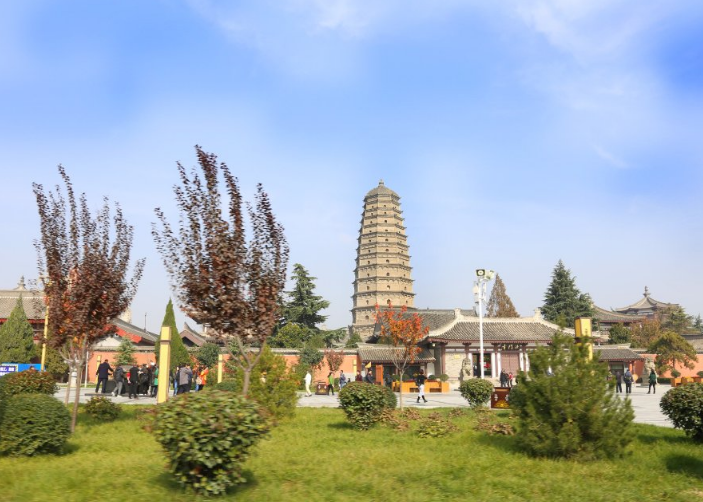
3. Namaste Dagoba (合十舍利塔)
Standing 148 meters high, the Namaste Dagoba is designed in the shape of two hands joined together in prayer. It consists of both ground and underground sections. The ground part houses statues of the Three Bodies of Buddha (Dharmakaya, Sambhogakaya, and Nirmanakaya), various Bodhisattvas, and the Four Heavenly Kings. In the underground palace, the true relic of Sakyamuni Buddha (sarira) is enshrined in the central hall. This unique design makes the Dagoba a new landmark of the Famen Temple Scenic Area as well as an important cultural symbol on the Silk Road Economic Belt.
4. Famen Temple Museum (法门寺博物馆)
The Famen Temple Museum is a national first-class museum, founded on the archaeological discoveries of the Tang Dynasty underground palace. It is the first museum in China to feature Tang imperial treasures and Buddhist art as its main collections. The museum currently holds 9,439 relics, including 138 first-class national treasures. The exhibitions are divided into three parts: the History and Culture Hall, the Treasure Hall, and the Gold and Silverware Gallery. Highlights include sarira reliquaries, Tang Dynasty gold and silver articles, Buddhist ritual objects, secret-color porcelain, glassware, and rare silk fabrics.
5. Famen Temple Monastery (法门寺寺庙)
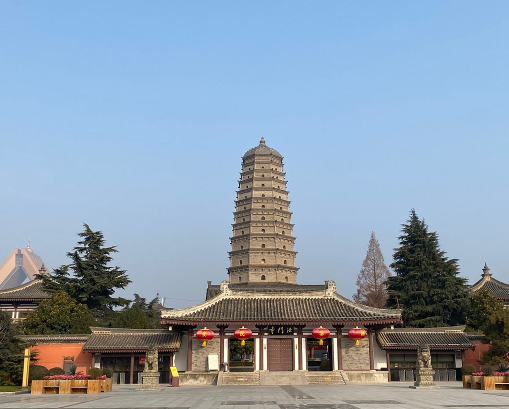
Originally built during the Eastern Han Dynasty over 1,800 years ago, Famen Temple gained renown as one of the few temples in China housing the true finger relic of Sakyamuni Buddha. Historically known as Ayuwang Temple, it was later renamed Chengshi Daochang in the Sui Dynasty, and finally given its present name “Famen Temple” by Emperor Gaozu of the Tang Dynasty. During the Tang era, it became an imperial temple as eight emperors held grand ceremonies to welcome or send off the Buddha’s relics. Within the scenic area’s South Second Gate lies the core temple complex, revered as the “Ancestor of Pagodas and Temples in Guanzhong.”
6. Tang Dynasty Underground Palace (唐代地宫)
Discovered in 1987, the underground palace of the Tang-era pagoda is the largest, oldest, and most sophisticated Buddhist underground structure ever found. It preserved an enormous number of treasures, many in near-perfect condition, ranging from gold and silverware to silks and Buddhist scriptures. These discoveries not only provide invaluable evidence for the study of Tang Dynasty politics, economy, religion, and culture but also represent the pinnacle of Tang civilization. The relics from this underground palace are considered a jewel of both Chinese and world cultural history.
How to Get to Famen Temple
2. From 8:00 to 11:00, there will be free bus in Tang Paradise west gate depart to Famen Temple hourly, and the bus will stop over Big Wild Goose Pagoda north square. About 90 minutes driving
► Starting from Baoji:
1. Baoji west bus station, from 7:00 to 15:30, every hour will have a bus sent to the Famen Temple, about 2 hours;
2. There is direct bus to Famen Temple from Baoji Airport Road Bus Station, the fare is 19 Yuan for one way, three shifts buses a day, departure time is 9:00, 11:30, and 16:00.