
Location

24 Hanshan Si Lane, Gusu District, Suzhou, Jiangsu Province, China
Reasons to visit
A thousand-year-old temple in China
Opening Hours
- 7:30~17:00
Hanshan Temple (Hanshan si) is located in Maple Bridge Town (Fengqiao) in the west outskirts of Suzhou, and used to be one of the ten most famous temples in China. Hanshan Temple is also named the Temple of Cold Mountain, located in the urban area of Suzhou City, and was constructed staring from 502, because of two famous senior monks. Hanshan Temple has been rebuilt for many times, and the last reconstruction is in the second half of the 19th century. With a history of over one thousand years, it has collected valuable cultural relics: buildings of the Qing Dynasty style, bell tower, stone carving, and tablet inscription. The most famous tablet inscription was carved with a popular poem wrote by Zhang Ji. 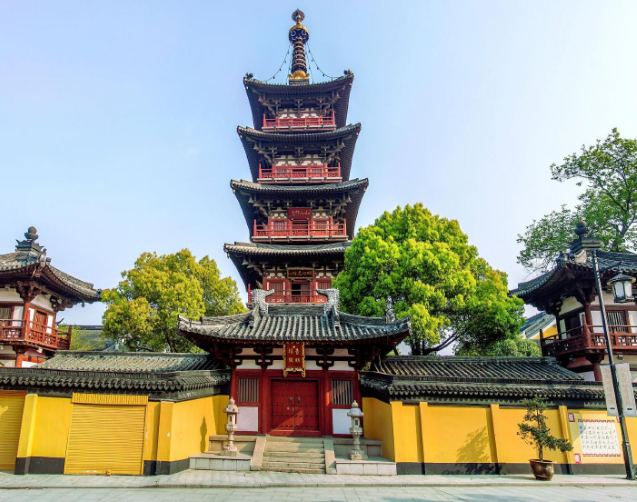
Hanshan Temple became well known after the Tang poet Zhang Ji wrote a famous poem when he passed by the temple on a small boat. Two lines of the poem reads, 'outside the Suzhou City wall, I heard the sound of Hanshan Temple bell onboard the boat and felt its midnight spell'. The poem describes the melancholy scene of a dejected traveller, moored at night at Fengqiao, hearing the bells of Hanshan Temple. The poem is still popularly read in China, Japan and Korea. And it is part of the primary school curriculum in both China and Japan.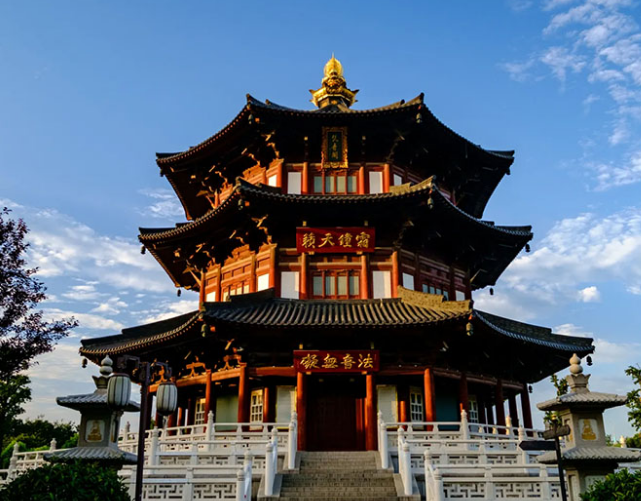
As a great cultural landmark in Suzhou, it not only has great influence on festival activities and local people's believings, but also attracts millions of tourists and visitors to worship. On 31 December every year, Hanshan Temple holds the event of Striking the New Year's Bell, during which the superior of the temple strike the bell 108 beats and visitors can enjoy themselves at various celebrations.
Architectural Layout
Most of the existing buildings in Hanshan Temple are from the Qing Dynasty. The main structures include the Mahavira Hall (Daxiong Baodian), Sutra Library, Bell Tower, Stele Corridor, Fengjiang Tower, and Shuangzhong Pavilion. Unlike many temples with a strict central axis layout, Hanshan Temple presents a staggered yet harmonious arrangement, reflecting the unique style of Jiangnan temples.
The Mahavira Hall is the core of the temple. In the center, a gilded statue of Sakyamuni Buddha is enshrined, with eighteen iron-cast gilded Arhat statues from the Ming Dynasty lined against the side walls. Behind the Buddha statue are stone carvings of Hanshan and Shide from the Tang Dynasty, instead of the more common Guanyin image found in other temples.
The Sutra Library is a two-story pavilion with a hip-and-gable roof. On the rooftop stands a sculpture group of Tang Monk and his disciples from Journey to the West, symbolizing their pilgrimage to obtain the scriptures. Above the eaves hangs a plaque inscribed with “Sutra Library” by Zhao Puchu, the former president of the Buddhist Association of China. Inside, the main hall houses statues of Hanshan and Shide, with the plaque “Hanshi Hall” displayed above the entrance.
Famous Attractions and Relics
Mahavira Hall (Daxiong Baodian)
Standing on a raised platform, the hall exudes grandeur. Its marble balustrades are carved with lotus seats and floral motifs, and incense burners in front of the hall are filled with curling smoke, creating a serene atmosphere. The hall also preserves the rare Tang-era stone images of Hanshan and Shide.
Bell Tower
The bell of Hanshan Temple has been renowned since ancient times, symbolizing spiritual awakening. A Buddhist verse summarizes its power: “Hear the bell, worries fade; wisdom grows, enlightenment arises.” Every New Year’s Eve, the bell is struck 108 times, each strike representing the removal of one earthly trouble. This tradition stems from the Tang Dynasty and echoes the imagery in Zhang Ji’s poem Mooring by Maple Bridge at Night.
Puming Pagoda
The temple originally had a pagoda called “Miaoli Puming Pagoda” more than 1,500 years ago, but it disappeared for centuries. The current Puming Pagoda was rebuilt in 1996 in Tang-style wooden architecture. It is a five-story square pagoda, 42.2 meters high, topped with a 9.6-meter gilded copper spire weighing 12 tons.
Hanshi Hall (Hall of Hanshan and Shide)
Located within the Sutra Library, this hall features statues of Hanshan and Shide. The roof is decorated with Journey to the West figures, reinforcing the temple’s Buddhist symbolism.
Sutra Library
Once the repository of scriptures, its interior walls are inlaid with Buddhist texts such as the Diamond Sutra and calligraphy inscriptions by famous masters.
Hualan Tower (Basket Tower)
On the southwest side of the temple stands the Hualan Tower, inscribed as “First Tower of Fengjiang.” Originally part of a Suzhou family estate, it was donated and relocated to Hanshan Temple in 1954. Its unique wooden basket-like carvings and refined structure make it a fine example of Suzhou architecture.
Suggested Visiting Route
Start at the West Gate → enter through the Hall of Four Heavenly Kings, the only incense-burning site.
Mahavira Hall → admire the Buddha and Arhat statues.
Hanshi Spring, Bell Pavilion & Bell Tower → strike the bell for blessings.
Hall of Harmony (Hanshan & Shide Shrine) → pay respect to the two legendary monks.
Puming Pagoda → walk around the tower, pray for peace, and read the stele with Zhang Ji’s poem.
Exit via Guanyin Peak → leave the temple through the West Gate.
How to get to Hanshan Temple
Visitors can take 313, 6, 9, 17, 21, 31, 301 to get off at Heshan Bridge.
Nearby Attractions
Maple Bridge (Fengqiao) Scenic Area: Adjacent to the temple, offering views of the ancient bridge, canal, and water-town scenery that inspired Zhang Ji’s famous poem.
Shantang Street: A historic canal-side street reachable by boat or car, filled with traditional houses, shops, and local restaurants where visitors can savor Suzhou cuisine and experience the city’s charm.