
Location

338 Liuyuan Road, Jinchang District, Suzhou, China
Reasons to visit
UNESCO World Heritage Site; One of the most famous classic gardens in China
Opening Hours
- 7:30-17:00
Lingering Garden is located in at 338 Liuyuan Rd. Suzhou, Jiangsu province, China. Lingering Garden is one of the great four gardens in China, together with the Summer Palace in Beijing, the Mountain Summer Resort in Chengde, and the Humble Administrator's Garden in Suzhou.
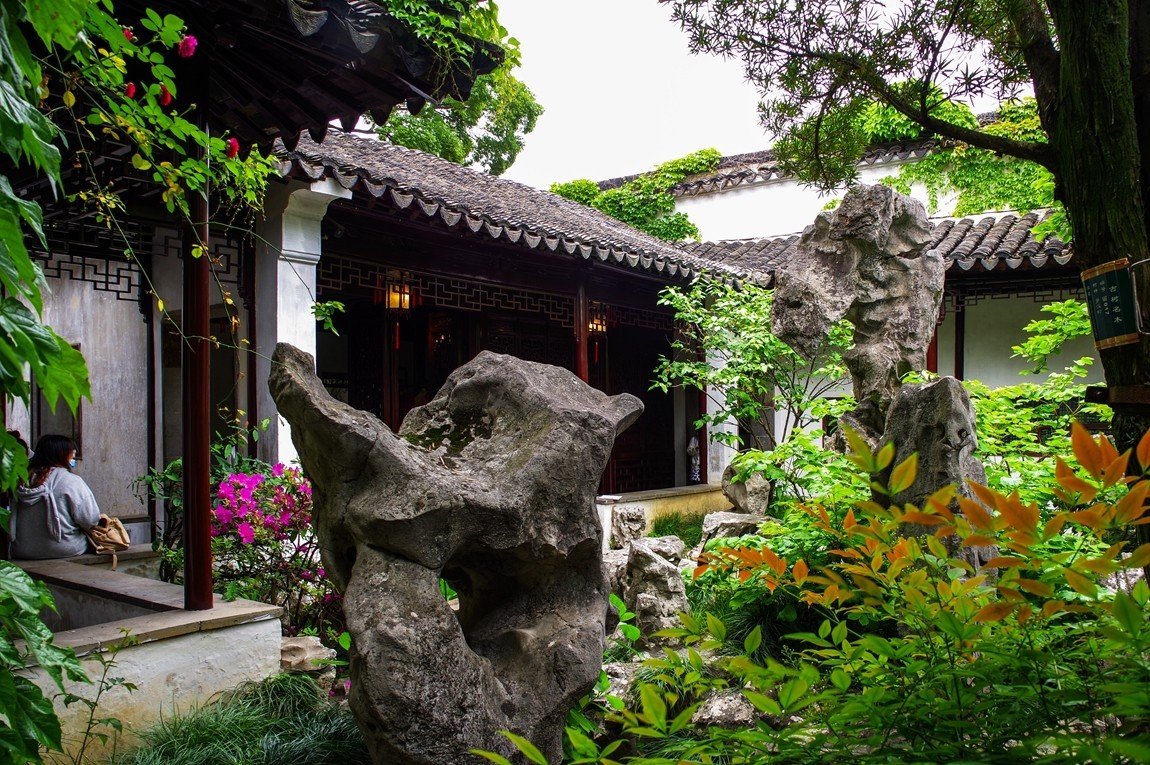
Covering an area of 23,300 square meters, Lingering Garden is also the large classical private garden in China. It was built in the Qing Dynasty style. The garden is known for exquisite architectural art. It boasts its fine gardening, luxurious and spacious hall, and collection of stones from Taihu Lake by which people can be freshened up without going out the city; design of courtyards is full of changes and surprise. Its architectural spatial processing skills are quite impressive. Gardeners make use of various artistic techniques, constituting a rhythmic garden space system. It is a world-famous example of architectural space artistic processing. Now the garden is divided into four parts: East, Central, West, and North. And every part shows unique features of the garden. Lingering Garden has become a main attraction for visitors to get to know more about classic architectures of ancient China.

History
Lingering Garden was first built in 1593 during the Wanli reign of Ming Dynasty by Xu Taishi, a bureaucrat of the Ming court, as his private residence. The garden was originally called East Garden, and the middle pond and overlapped yellow stone rockeries on the west of the pond are built at that time. After his death, Liu Su became the owner of the garden. By rebuilding it, Liu plated many bamboos and had many stones inscribed out of his hobby. After being expanded and renovated, it was renamed "Hanbi Villa", which was popularly known as "Liu Garden". In 1873, it was purchased by the Shengs, who renamed it as "Lingering Garden". As "lingering" has the same pronunciation with 'Liu' in Chinese, the surname of the former owner. The garden was inherited by Sheng Xuanhuai from his father, he abandoned the garden in 1911 and it fell into disrepair.
After establishment of the People's Republic of China, Suzhou government took over and renovated the garden. It was reopened to the public in 1954. In 1997, the garden was added to the UNESCO Word Heritage list, together with Humble Administers Garden, Master of Nets Garden and Huan Xiu Mountain Villa. Since then, it remains a major tourist destination in Suzhou.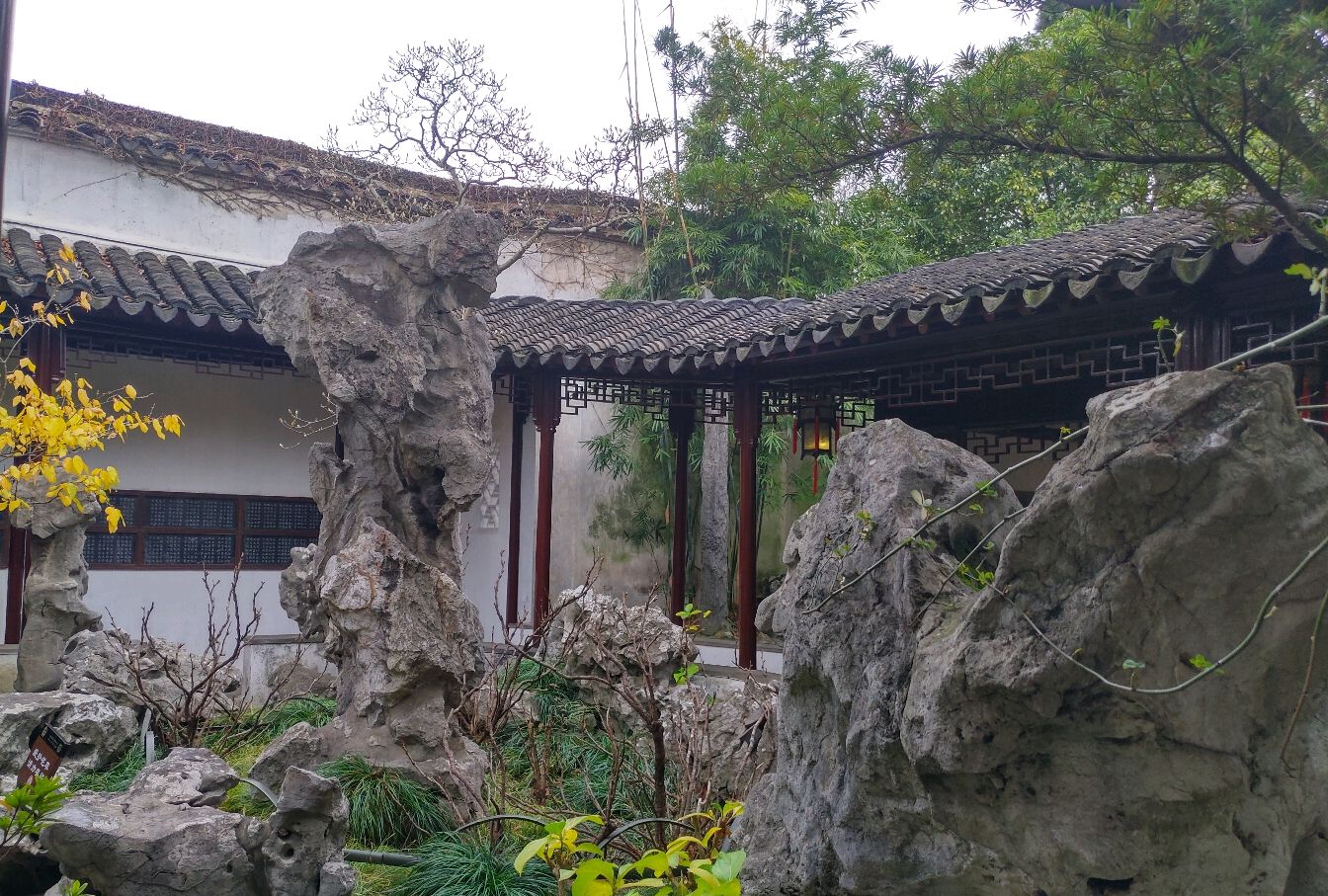
Design Features

The garden is separated into the East, Central, West, and North four themed parts. The ancestral temple and the house lie to the south of the garden.
The Central part is the oldest part of the garden. It features a man-made mountain and lakeside scenes, resembling a long scroll of traditional Chinese painting. It is centered upon a lake with man-made mountain in the north-west and a number of attractive buildings in the southwest, such as the Green Shade Pavilion, the Pellucid Tower, the Zigzag Stream Tower, the Hao Pu Pavilion, the Hanbi Moutain Villa, and the Refreshing Breeze Pavilion by the lake. The mountains made mainly of yellow stones and earth.
The eastern part is noted for its joyous groupings of gardens and elegant buildings. A winding roofed walkway behind the small entrance of the garden, while leading to the places of quietude, shows the masterly use of contrast between big and small, straight and zigzag, and light and shade.
The western part sets a fine example of good-looking earthen hills studded with yellowstones and covered with maple trees. There is a winding brook lined with peach trees and weeping willows.
And the northern part, cottages with bamboo fences and idyllic scenes.
Highlight to Visit
Guanyun Peak (冠云峰): Located just south of the Guanyun Tower and flanked by Ruiyun Peak and Xiuyun Peak to the east and west, the three rocks form a triangular layout. Standing at 5.7 meters high and placed on a base of 0.8 meters, Guanyun Peak reaches a total height of 6.5 meters, making it the tallest surviving Taihu Lake stone in China. The peak appears grayish white and slightly arched, tall yet graceful, slim yet sturdy, with natural perforations and creases. It perfectly embodies the four classical aesthetic criteria for stones admired by ancient scholars – slenderness, openness, perforation, and wrinkling. Guanyun Peak is considered a masterpiece among ornamental rocks.
Wufengxian Hall (五峰仙馆): Located in the eastern section, this is the main building of the Lingering Garden and also its largest hall, with an area of 265 square meters. Facing south with a hill in front, the hall is five bays wide and nine rafters deep, featuring a gable roof. Known as the Nanmu Hall, its entire structure was originally constructed with precious nanmu wood. On the east and west walls, four large marble plaques are mounted on dark redwood frames. The natural patterns on the marble resemble traditional Chinese landscape paintings, while their arrangement — round above and square below — reflects the ancient Chinese cosmological belief of “round heaven and square earth,” symbolizing harmony between nature and humankind.
Hanbi Mountain Villa (涵碧山房): Located in the central section, the hall takes its name from a verse by Song Dynasty philosopher Zhu Xi: “A stream reflects green; autumn has already turned the forests red.” Both its north and south sides are without walls, each installed with eighteen tall windows that can be opened at will, allowing visitors to enjoy framed views of the surrounding scenery.
Wenmuxi Xiang Pavilion (闻木樨香轩): Perched atop the central rockery, this half-pavilion is connected to the corridor and surrounded by osmanthus trees. Its name, literally meaning “Pavilion of Osmanthus Fragrance,” reflects the sensory charm of the garden. A couplet hung here reads: “Strange rocks contain the beauty of ages, osmanthus fragrance moves the autumn of thousands of hills.” It poetically captures the harmony of sight and scent, creating a Zen-like artistic mood.
Stone Forest Courtyard (石林小院): Situated between Wufengxian Hall and Linquan Qishuo Hall, this is a classic example of Suzhou gardens’ ability to create richness within small spaces. The courtyard measures 29 meters north to south and 15 meters east to west, with only about 60 square meters in its central area. The owner cleverly subdivided it into six smaller courtyards, each interconnected, with ornamental Taihu stones and seasonal plants scattered throughout. These mini-courtyards form layers of framed views, giving visitors a sense of space expanding rather than shrinking — a delightful experience of “a courtyard within a courtyard, and scenery beyond scenery.”
How to Get to Lingering Garden
By Metro: Take Suzhou Metro Line 2 and get off at Shilu Station (Exit 1). From there, it is about a 900-meter walk to the garden.
By Bus: Take Tourist Bus Line 1, Bus 85, or other routes such as Bus 7, 33, 4, 70, 88, 91, 933, 101, 103, 317, etc., and get off at Liuyuan (Lingering Garden) Station.