
Location

Dengfeng city, in the heart of Henan Province, China.
Reasons to visit
Top 5 mountain in China.
Opening Hours
- 8:00a.m.-5:00p.m.
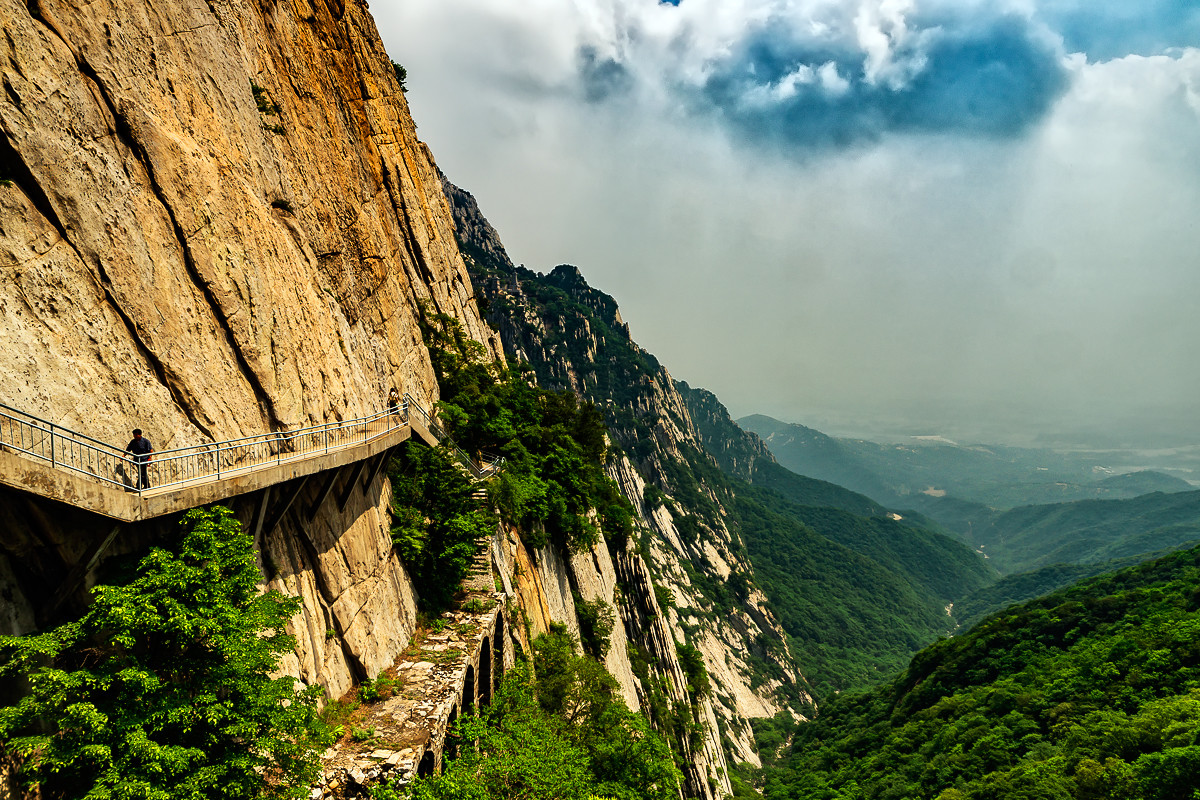
As the highest mountain among the Sacred Five Mountains of China, the essence of Mt. Songshan trip is the Shaolin Temple, which is situated right on the mountain. Mt. Songshan is located in the northwest of Dengfeng County and reputed as the Central Sacred Mountain among China's Five Sacred Mountains. Mt. Songshan stretches more than 60 km across from east to west. It consists of two mountains - Taishi and Shaoshi, with 36 peaks altogether. It is about 70 Km from Zhengzhou and the trip takes about 2 hours from Zhengzhou. Its highest peak, Liantian Peak, is 1512 meters.
History and Geological Significance of Mount Songshan
Mount Songshan has an extremely long history, both in terms of geology and human civilization. Over time, the mountain experienced several major crustal movements, including the Songyang Movement and the Zhongyue Movement. As a result, Mount Songshan preserves rock layers from five major geological eras, ranging from the Archean to the Cenozoic period. Because of this rare and complete geological record, it is often described as a “natural geological museum”, where multiple geological ages can be observed in one area.
Mount Songshan is equally important in Chinese cultural history. Since ancient times, it has been regarded as the “center of heaven and earth” in traditional Chinese geography and philosophy. During the Xia and Shang dynasties, the mountain was known as “Chonggao”, while in the Western Zhou Dynasty it was officially named Mount Yue. By the Han Dynasty, Mount Songshan had become a major site for imperial sacrifices and state rituals.
In the Northern Wei Dynasty, Taoism flourished in the area, and during the same period, Shaolin Temple was established and later became the birthplace of Chan (Zen) Buddhism. In the Tang and Song dynasties, Mount Songshan attracted many famous scholars and poets, including Li Bai and Ouyang Xiu, who left behind poems and inscriptions. During the Ming and Qing dynasties, institutions such as Songyang Academy became important centers for Confucian education.
In 2004, it was designated a UNESCO Global Geopark. In 2010, the “Historic Monuments of Dengfeng in ‘The Centre of Heaven and Earth’”, including Shaolin Temple and Songyang Academy, were inscribed as a UNESCO World Cultural Heritage Site. Today, Mount Songshan is widely regarded as a destination that represents both natural history and human civilization in China.
Scenic Area Layout of Mount Songshan
Mount Songshan is divided into three main scenic areas: the Shaolin Scenic Area, the Songyang Scenic Area, and the Zhongyue Scenic Area. It is important to know that Mount Songshan is not a single mountain. If you want to fully explore Mount Songshan, you will need to hike two different mountains.
Shaolin Scenic Area (Shaoshi Mountain)
The Shaolin Scenic Area is located on Shaoshi Mountain. The highest peak, Liantian Peak, is part of Shaoshi Mountain. Major attractions in this area include: Shaolin Temple, Sanhuangzhai, Bodhidharma Cave (Damo Cave), Martial Arts Hall, Pagoda Forest, Second Patriarch’s Hermitage (Erzu An). Inside the scenic area, visitors can take electric sightseeing carts or shuttle buses.
Songyang Scenic Area (Taishi Mountain)
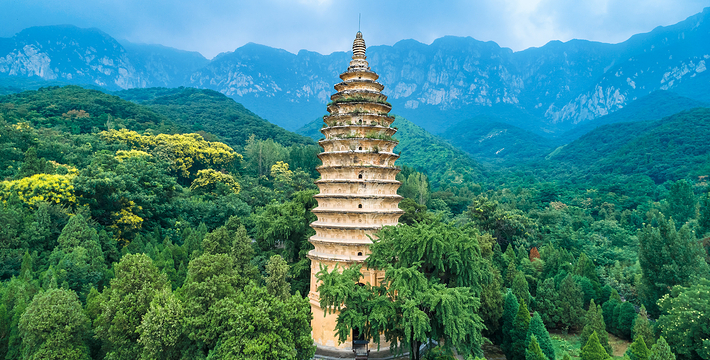
The Songyang Scenic Area is located on Taishi Mountain. The main peak, Junji Peak, is also on Taishi Mountain. Major attractions include: Songyang Academy, Laomu Cave, Junji Peak, Fawang Temple, Songyue Pagoda (Songyue Temple Pagoda)
Zhongyue Scenic Area
The Zhongyue Scenic Area mainly includes Zhongyue Temple. If you are short on time, this area can be skipped.

Suggested Itineraries
Three-Day Itinerary
Day 1
Daytime: Visit the Shaolin Scenic Area. The recommended route is: Shaolin Temple – Kung Fu Performance – Pagoda Forest – Sanhuangzhai. If you still have enough energy, you can also visit: Chuzu An (First Patriarch’s Hermitage), Bodhidharma Cave, and Erzu An (Second Patriarch’s Hermitage).
Evening: Watch the Zen Shaolin Music Grand Ceremony.
Day 2
Daytime: Visit the Songyang Scenic Area. The recommended route is: Songyang Academy – Songyue Pagoda – Fawang Temple – Huishan Temple – Taishi Mountain. Taishi Mountain is relatively steep. If your physical condition does not allow, you can visit fewer sites.
Evening: Walk around Dengfeng city, and buy local snacks and souvenirs for family and friends.
Day 3
Visit the Zhongyue Scenic Area. The recommended route is: Zhongyue Temple – Luyai Waterfall – Ancient Observatory (Guantai). This three-day itinerary covers most of the highlights of Mount Songshan. It can be tiring, so you may choose attractions based on your physical condition.
Two-Day Itinerary
Day 1
Daytime: Shaolin Temple – Kung Fu Performance – Pagoda Forest – Sanhuangzhai – Songyang Academy (About 5 hours in total)
Evening: Zen Shaolin Music Grand Ceremony
Day 2
Zhongyue Temple – Luyai Waterfall – Ancient Observatory (About 5 hours in total). This two-day itinerary covers the main highlights of all three scenic areas.
One-Day Itinerary
If you only have one day, you can visit: Shaolin Temple – Kung Fu Performance – Pagoda Forest – Sanhuangzhai – Songyang Academy or Zhongyue Temple (About 5 hours in total).
Half-Day Itinerary
If you only have half a day, you can visit: Shaolin Temple – Kung Fu Performance – Pagoda Forest. (About 2.5 hours in total)

Highlights to See in Mount Songshan
While besides Shaolin Temple, Mt. Songshan itself also gets many valuable things to see. Mt. Songshan also boasts a large number of showplaces and cultural relics. The most famous Shaolin Temple is located here, where Shaolin monks exercise Qigong and other Shaolin Kong-fu (martial arts). There are some other temples in the mountain, such as the Zhongyue Temple, which is nicknamed "the Little Palace"; the Fawang Temple and the Huishan Temple, the oldest temples extant in China; two earliest and well-preserved astronomical observatories extant in China; etc. Mt. Songshan abounds in stele carvings as well, totaling more than 2,000 pieces, left by famous calligraphers like Yan Zhenqing, Su Dongpo, Huang Tingjian and Mi You, etc.
【Shaolin Temple】
Shaolin Temple is located in the north of Shaoshi Mountain in Mt.Songshan area. It was originally built in 495. This temple is traditionally considered the birthplace of Zen Buddhism. The main attractions to see in the temple include the Hall of a Thousand Buddhas, the Shadow Stone, depositarry of Buddhist texts, Mahavira Hall, etc. The Hall of a Thousand Buddhas is the largest building in the temple. In the Shadow Stone, you can see Bodhidharma’s shadow burned into the rock from his years of meditation.
【Pagoda Forest】
Pagoda Forest here is the largest pagoda forest of Buddhism in the world. It is sited only about 300 meters westwards of Shaolin Temple and covers an area of about 20,000 square meters. Here is where 231 eminent Shaolin monks are honored with shrines. There are nearly 231 stone and brick pagodas aging from the Tang, Song, Jin, Yuan, Ming and Qing dynasties (618-1911), as well as modern times. If you can escape the vendors walking around with prayer beads for sale, it is really quite lovely to wander through this quiet wooded place.
【Zhongyue Temple】
Zhongyue Temple is a sacred place of Taoism and one of the earliest Taoist temples in the country. It is sited in the eastern foothills of Mount Songshan’s Taishi Peak. It was first built in the Qin Dynasty (221-206 BC) and originally known as Taishi Temple. The buildings in the temple, covering an area of over 100,000 square meters, went through extensions and rebuilt for many times. The last time they were rebuilt was during Emperor Qianlong’s reign in the Qing Dynasty (1644-1911). The axis, a flagged pathway 700 meters long, extends from the front Zhonghua Gate in the south to the rear gate of Yushu Tower in the north. The east and west wings of the temple consist of the buildings, each having a small separate courtyard. The temple houses many relics with 330 old cypresses, 100 stone steles, iron warriors, sacred ding tripods, etc..
【Songyue Pagoda】
Songyue Pagoda is sited in the south foothills of Mount Songshan’s Taishi Peak. Constructed during the Northern Wei Dynasty, this pagoda is one of the few intact sixth-century pagodas in China and also the earliest known Chinese brick pagoda.
Travel Guide
【Best time to visit】: March to May, September to November are the best time periods to visit the Mount Songshan area. Both of the two periods are neither too cold nor too hot, with less rain and beautiful views. March to May is the spring time in the area. Here will be covered with all kinds of flowers and green trees. September to November is the autumn time, when is the best time to see fantastic autumn view with red leaves.
【How to get there】: one may take Bus Route No. 1, 2, 3, 6, 8, 9, etc. in Dengfeng City center to get there.