
Location
Guangzhou, Guangdong Province, China
Reasons to visit
One of the longest River in China
Opening Hours
- All day
As the third largest river in China, the Pearl River measures 2,320 kilometers in length, with its name deriving from the Haizhu Rock (Sea Pearl Rock). When the thousand-meter long Pearl River went through Guangzhou City, a huge rock island in the center of the river was scoured time and again and became smooth and bright like a pearl, called 'Sea Pearl Rock', hence the name 'Pearl River' for the river with this rock.
The Pearl River is one of the famous scenic spots in Guangzhou. Praises to the beauty of the Pearl River have been 'Red Heart of the Pearl Sea' and 'Night Moon over the Goose Pool', selected in 1962 as of the Eight Sights of Guangzhou, plus the 'Sunlight Reflection at Shimen' of the old Eight Sights of Guangzhou and the recently selected 'Clear Waves of the Pearl River' of the Eight Sights of Guangzhou.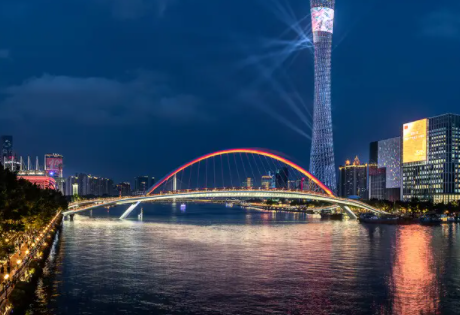
Taking a cruise is the best way to explore the Pearl River. The cruises usually depart from Dashatou Dock or Tianzi Dock and will pass by famous sited in Guangzhou, such as Haiyin Bridge, Guangzhou Bridge, Haixinsha Bridge, Guangzhou TV Tower, Liede Bridge, etc. The whole cruise will take about 70 minutes. You can take the subway or taxi, then buy the tickets in the ticket office to enjoy your cruise trip; or you can also book the cruise tickets trough a local travel agent.
How the Pearl River Formed
The Pearl River is a complex river system formed through long-term geological processes and hydrological evolution. Geologically, its formation can be traced back to the Tertiary Period (around 65 million to 2.6 million years ago), when tectonic movements in southern China created fault basins and uplifted mountain ranges. The main branches of the Pearl River—the Xijiang (West River), Beijiang (North River), and Dongjiang (East River)—originate from different mountainous areas: the Xijiang rises in the Yunnan-Guizhou Plateau, the Beijiang from the Nanling Mountains, and the Dongjiang from the Wuyi Mountains.
Over millions of years, these rivers eroded the land, carrying sediment and gradually carving out their courses. They converged in the Pearl River Delta (near Guangzhou) as they flowed toward the South China Sea, forming a vast alluvial plain rich in fertile soil. The delta’s formation accelerated during the Quaternary Period (the past 2.6 million years) due to increased sediment deposition from upstream erosion. The river system earned its name “Pearl River” because ancient residents found pearlescent mussel shells in its waters, a result of the delta’s brackish environment and abundant aquatic life.
Today, the Pearl River system covers a drainage area of about 453,690 square kilometers, making it one of the largest river systems in China. Its complex network of tributaries and the alluvial delta it created have not only shaped the region’s geography but also supported the development of agriculture, industry, and human settlements—including the thriving city of Guangzhou.
Ways to Explore the Pearl River
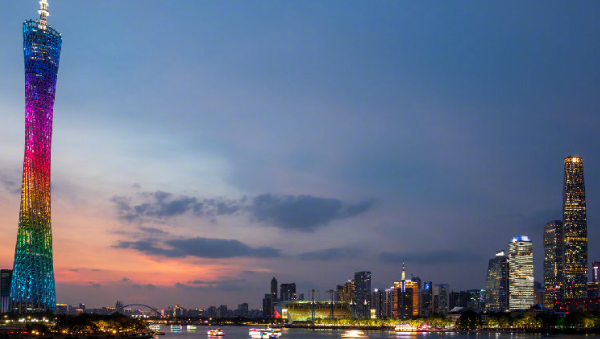
There are several distinct ways to experience the Pearl River, each offering a unique perspective: Pearl River Night Cruise is the most iconic choice—departing from piers like Tianzi, Xidi, or Dashatou, these 60-90 minute cruises let you admire the dazzling night views of landmarks such as Canton Tower and Zhujiang New Town skyline, with options for standard rides or dinner cruises featuring Cantonese cuisine (book in advance for peak times). Water Bus Rides provide an authentic local experience; affordable ferries (2-5 RMB) connect piers like Xidi, Huangsha, and Tianzi, offering a casual commute-style journey past Shamian Island and old waterfront buildings. Riverside Walks allow for leisurely exploration—stroll along the Pearl River Bund from Tianzi Wharf to Haixinsha, visit Haixinsha Park for its giant “Guangzhou” sign and Canton Tower views, or relax in Liwan Lake Park with its Lingnan-style pavilions and boat rides. For a bird’s-eye view, head to the Canton Tower observation deck on the north bank, where you can overlook the river winding through the city, especially stunning at night when the water sparkles with lights from boats and shoreside structures.
Pearl River Night Cruise
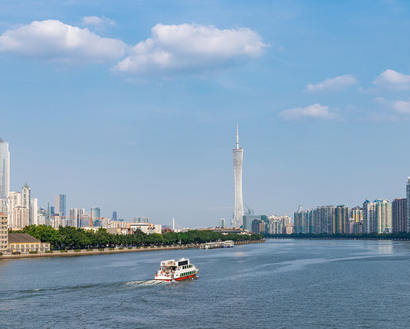
The most popular way to experience the river. Cruises depart from major piers like Tianzi Wharf, Xidi Wharf, and Dashatou Wharf, lasting 60-90 minutes. As the sun sets, the riverbanks light up with neon lights, and landmarks like the Canton Tower, Haixinsha Asian Games Park, and Zhujiang New Town skyline create a dazzling panorama. Opt for a dinner cruise to enjoy Cantonese cuisine while taking in the views, or a standard cruise for a more budget-friendly option. Book tickets in advance during peak seasons (weekends, holidays).
- Ticket Purchase Methods:
- - Online Booking (Recommended): Use Chinese travel platforms like Ctrip, Fliggy, or the official WeChat mini-program “遇见珠水” (Yujian Zhushui) to book tickets. For Canton Tower-related cruises, check the official website (https://www.cantontower.com/ticket/guidelines/) for reservations. Online booking often offers discounts and allows you to select specific departure times and boat types.
- - On-Site Purchase: Buy tickets directly at the ticket offices of major piers (e.g., Tianzi Wharf, Xidi Wharf) 1-2 hours before departure. Note that tickets may sell out quickly during peak seasons (weekends, holidays, and festivals).
- - Hotel Concierge: Many hotels in Guangzhou offer cruise ticket booking services for guests, often with convenient pickup arrangements.
Booking Tips: Book tickets 1-3 days in advance, especially for weekend or holiday cruises. When booking online, confirm the departure pier, time, and boat model (open deck or enclosed). Present your electronic ticket (via phone) or ID/passport at the pier for check-in.
Choose a boat with an open deck for better photo opportunities (some enclosed decks have glass windows that may reflect light).
Riverside Walks and Parks
Stroll along the Pearl River Bund (from Tianzi Wharf to Haixinsha) for scenic views. Haixinsha Park, located on a sandbar in the river, is famous for its giant “Guangzhou” sign and views of the Canton Tower. Liwan Lake Park (connected to the Pearl River system) offers a peaceful escape with traditional Lingnan pavilions, lotus ponds, and boat rides.
Historical Piers
Visit Tianzi Wharf, Guangzhou’s oldest operating pier (dating back to the Ming Dynasty), with its distinctive red-roofed buildings. Whampoa Military Academy Pier provides access to the Whampoa Military Academy, a historic site where many prominent Chinese military leaders trained in the early 20th century.
Canton Tower Viewing
While not on the river itself, the Canton Tower stands majestically on the north bank. Take the elevator to its observation deck for a bird’s-eye view of the Pearl River winding through the city, especially stunning at night when the river sparkles with lights from boats and buildings.
Water Bus Rides
For a local experience, take the water bus between piers like Xidi, Huangsha, and Tianzi. These affordable ferries (around 2-5 RMB) offer a casual way to see the river and commute like a Guangzhou local. The ride between Xidi and Huangsha piers passes Shamian Island and old waterfront buildings.
How to Get to Major Piers
- Tianzi Wharf: Take Metro Line 2 or 6 to Haizhu Square Station (Exit A), walk 5 minutes east along Yanjiang Road.
- Xidi Wharf: Take Metro Line 6 to Xidi Station (Exit B), walk 3 minutes south to the waterfront.
- Dashatou Wharf: Take Metro Line 6 to Dashatou Station (Exit A), walk 8 minutes west along the river.