
Location

91 Xiaozhai E Rd., Yanta District, Xian, Shaanxi Province, China
Reasons to visit
Perfect place to watch vast collections of ancient cultural artifacts
Opening Hours
- 8:30-17:30 (Tuesday to Sunday)
- Closed on Mondays
In the southern part of Xian about one kilometer northwest of the Great Wild Goose Pagoda stands the Shaanxi History Museum, a large State-grade Museum, which covers an area of seven hectares. It consists of a group of magnificent Tang-style palaces. As the regional capital and doorway to the Silk Road, Xian was one of the richest, most well-protected cities in all of China. The famous Shaanxi History Museum introduces the visitor to area rich culture, from Emperor Qin Shi Huang to the present day in this walled city.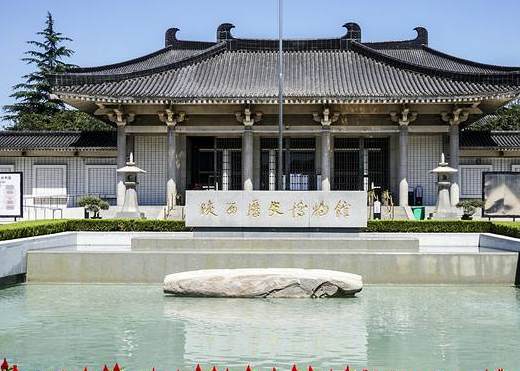
Construction of Shaanxi History Museum
Constructed from 1983, this history museum was opened to the public since 1991. Taking a Tang style architectural art, Shaanxi History Museum conveys an idea that "hall in center, storied buildings in corners". It is an elegant building that mixes the traditional and modern technology harmoniously.
Museum Collections
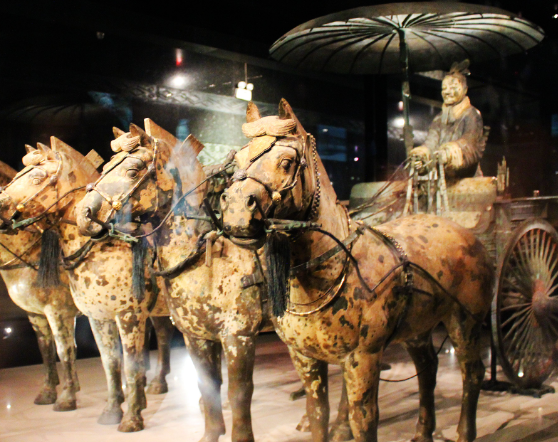
The museum is house in a striking Tang Dynasty-style pavilion and features an enormous collection of 113,000 historic and cultural relics. This is where you experience history, with chronological dynasties exhibits that take you through the Han, Wei, Jin, Sui, Tang, Song, Yuan, Ming and Qing dynasties. It is an ideal place for learning about the origins and development of ancient Chinese history. There are several typical categories of collections:
【Bronze Ware】
Over 3900 bronze wares has logged and registered. The collections are from the Shang and Zhou Dynasties to the Qin and Han Dynasties. There are sacrificial vessels, instruments, weapons, horses and chariots devices, daily necessities and production tools. The most typical bronze wares are the Shang and Zhou Dynasties’ bronzes, many are with high historical value inscription on them.
【Tang Dynasty Tomb Frescoes】
There are more than 400 frescoes, with an area of over 1000 square meters. The frescoes were uncovered from 25 tombs of Tang Dynasty during 1952-1989.
【Terracotta Figurines】
The collections include terracotta figurines of Qin, Han, the Northern Dynasties, Song, Yuan, Ming and Qing Dynasties. The artistic images include civil and military officials, soldier guards, valet waitress, western barbarian, and kings, tomb beast and horses, camels and other animals.
【Pottery and Porcelain】
There are prehistoric Yangshao potteries, primitive celadon of Western Zhou Dynasty, the Han Dynasty glazed pottery, Han pottery, tri-colored glazed pottery of the Tang Dynasty ancient glass, colored glaze, Tang Dynasty secret color ware, Song celadon and so on.
Except the above 4 categories, there are also building materials, bronze mirror, gold and silver, jade ware, coins, calligraphy and painting, scrolls, fabrics, bone ware, wood ware, lacquer ware, iron ware, stone ware, chop, lute, and the modern national heritage and folk heritage.
And today, besides the ancient Chinese collections are displayed, this museum also provides a platform to exhibit relics from overseas cities including Japan, France, the United States and Germany.
Exhibition Halls
The basic exhibition of Shaanxi History Museum is Shanxi ancient civilization. It was officially opened in 2008. The whole display area is 5051 square meters. There are 3 exhibition halls, displaying in 7 parts: pre-history; Zhou Dynasty; Qin Dynasty; Han, Wei, Jin, the Northern and Southern Dynasties; Sui and Tang Dynasty; Song, Yuan, Ming and Qing Dynasties.
【Exhibition Hall 1】
The first unit: Ren Yuan Yi Bie, the ancients of 1.15 million years ago. The second unit: Feng Ming Qi Shan, displaying rich rites of Western Zhou Dynasty’s palace. The third unit: Empire East, displaying Terracotta Warriors of Qin Dynasty.
【Exhibition Hall 2】
The forth unit: Mainly displaying Changan – the ancient capital of Han, mausoleum, and typical Han cultural relics. The fifth unit: Great fusion of Shaanxi nationalities, rich cultural relics of Buddhist learning and religious heritage
【Exhibition 3】
The sixth unit: Prosperous Tang Dynasty. The seventh unit: after Tang Dynasty.
Qin and Han Civilization Museum (秦汉馆 Qin Han Hall)
The Qin and Han Civilization Museum (Qin Han Hall) is a new extension of the Shaanxi History Museum. It is China’s first large-scale themed museum dedicated entirely to Qin and Han civilization. Officially opened in May 2024, the hall presents a modern and immersive interpretation of ancient Chinese empire-building and innovation.
Designed again by Zhang Jinqiu, the hall’s architecture is majestic, echoing the grandeur and authority of the Qin and Han dynasties. Inside, there are over 1,500 artifacts, 90% of which are on display for the first time, including:
- Gilded Bronze Tiger Tally (错金杜虎符) – symbol of military power during the Qin era.
- Imperial Jade Seal of the Han Empress (汉代皇后玉玺) – representing royal authority.
- Gilded Bronze Bamboo-shaped Censer (鎏金铜竹节熏炉) – masterpiece of Han metal artistry.
Through cutting-edge multimedia, digital mapping, and immersive projection technology, visitors can vividly experience the political systems, science, and cultural achievements of the Qin and Han dynasties.
Location: East Section of Lanchi 3rd Road, Xixian New Area, Xianyang City, Shaanxi Province. The hall is located about 30 km from the main Shaanxi History Museum (91 Xiaozhai East Road, Yanta District, Xi’an).
How to Get There:
Take Xi’an Metro Line 14 to Qingong Station or Qinhan Xincheng Station. After exiting, walk about 10 minutes (or take a free shuttle bus) to the South Gate of the museum.
Note: Reservations for the main museum and Qin Han Hall must be made separately. Please double-check your booking before visiting.
How to Get to Shaanxi History Museum
By Metro:
Take Metro Line 2 or Line 3 to Xiaozhai Station, then walk 7–8 minutes east along Xiaozhai East Road.
Alternatively, take Metro Line 3 or Line 4 to Dayanta Station, then walk 10 minutes west to reach the museum.
By Bus:
Take bus routes 19, 24, 26, 27, or 30 and get off at the “Shaanxi History Museum” stop.
Travel Tips
- Booking: Entry is free but requires advance online reservations (available through the museum’s official WeChat mini-program or website).
- Best Visit Duration: 3–4 hours for a comprehensive tour.
- Guided Tours: English-speaking guides and audio devices are available for rent.
- Nearby Attractions: Great Wild Goose Pagoda, Tang Paradise, and the Xi’an Museum with Small Wild Goose Pagoda.
Difference Between Shaanxi History Museum and Xi’an Museum: How to Choose
Besides the Shaanxi History Museum, Xi’an also has another well-known museum — the Xi’an Museum. If you don’t have enough time or fail to reserve tickets for the Shaanxi History Museum, visiting the Xi’an Museum is a great alternative.
1. Positioning and Level
- Shaanxi History Museum: A national-level museum and one of China’s first AAAA-rated scenic spots, it is praised as the “Pearl of the Ancient Capital” and the “Treasure House of Chinese Civilization.” Designed by academician Zhang Jinqiu, the building combines the grandeur of Tang-style architecture with modern elements and has won the Architectural Society of China Award.
- Xi’an Museum: A municipal-level museum, centered around the Small Wild Goose Pagoda, it focuses more on displaying local history and lifestyle aesthetics of Xi’an.
2. Collections and Exhibits
- Shaanxi History Museum: Houses over 1.7 million artifacts, spanning from the Neolithic Age to the Qing Dynasty, including 18 national treasures such as the Agate Cup with Gold Beast Head and the Tang Sancai Camel with Musicians Figurine.
- Xi’an Museum: Contains about 130,000 artifacts, mainly from the Xi’an area, such as the Tang Sancai Flying Horse and architectural components from the Small Wild Goose Pagoda.
3. Architecture and Visiting Experience
- Shaanxi History Museum: Features grand Tang-style exhibition halls and advanced facilities, but due to its popularity, visitors must book 3–7 days in advance. It’s often crowded, and a full visit takes around 3–4 hours.
- Xi’an Museum: Boasts a garden-style layout integrated with the Small Wild Goose Pagoda Scenic Area, with easier reservations and fewer crowds. A visit typically takes 2–3 hours and offers a more relaxed experience.
4. Recommended Audience
- Shaanxi History Museum is ideal for history enthusiasts who want an in-depth understanding of ancient Chinese civilization.
- Xi’an Museum, with its tranquil environment and cultural charm, suits leisure travelers looking for a quieter visit. You can even join the morning bell ceremony at the Small Wild Goose Pagoda for a peaceful cultural experience.