
Location
1952 Century Avenue, Pudong New Area, Shanghai, China
Reasons to visit
One of the largest museum in China with rich ancient relics
Opening Hours
- 10:00-18:00(Last entry is 17:00)
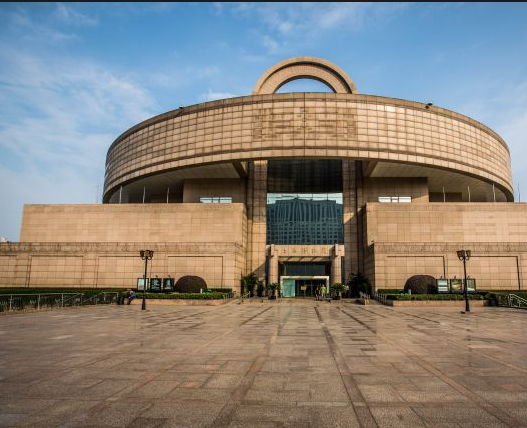
The Shanghai Museum(East Museum) is located at No.1952 Century Avenue, Pudong New Area. With "the world's top China Museum of Ancient Art" as its main orientation, there are 20 exhibition halls and interactive experience spaces in the museum. Among them, there are eight permanent exhibition halls, such as Bronze Hall, Calligraphy Hall, Painting Hall, Seal Hall, Ceramics Hall, Currency Hall, Sculpture Hall and Jade Hall, which can be called eight "China Ancient Art History Textbooks". With the unique panoramic pattern in the world, the most complete exhibition of the general history of China ancient art at home and abroad is built.
At the same time, the Shanghai Museum(East Museum) has launched a brand-new interactive experience space, held colorful special exhibitions, highlighted the highlights of "audience-friendly" and "digital intelligence", and made it an important cultural window for the world to see China.
Collections in Shanghai Museum(East Museum)
Bronze Hall
Bronze is an important symbol of the development of ancient civilization in China, which shows different styles in different periods and has different characteristics in different regions. The emergence of bronze wares in the Xia Dynasty marked the arrival of the Bronze Age in China. In Shang and Zhou Dynasties, bronze casting technology developed rapidly and reached its peak. In the Spring and Autumn Period and the Warring States Period, bronze casting began to show regional characteristics. Since the Han Dynasty, with the prevalence of the use of iron and the development of other techniques, the bronze casting industry has gradually declined. However, from the Northern Song Dynasty to the Qing Dynasty, with the rise of epigraphy, the retro style of bronze became a social trend again.
Sculpture Hall
China's ancient sculpture art has a long history and a rich variety. In the Neolithic sites, a large number of sculptures with various materials were unearthed. On the basis of inheriting the early civilization, more magnificent craft sculptures such as jade, stone carving, bone carving and bronze casting appeared in Xia, Shang and Zhou Dynasties.
During the Qin and Han Dynasties, craft sculptures became more diverse and more exquisite. The exchange of sculpture art between the East and the West opened a new chapter with the introduction of Buddhist sculpture art into the Han Dynasty along the Silk Road in the Eastern Han Dynasty. From Wei, Jin, Southern and Northern Dynasties to Sui and Tang Dynasties, religious sculptures in grottoes and monasteries entered a prosperous period, and tomb sculptures continued to develop, and the exchange and integration of different cultures were reflected in sculptures in this period. During the Five Dynasties and the Song Dynasty, tombs and grottoes sculptures turned from prosperity to decline, while temples, buildings and craft sculptures ushered in a prosperous era.
Seal Hall
China Seal Hall in Past Dynasties is the first museum dedicated to the exhibition of seals at home and abroad. At this exhibition hall, you will know about the origin of the world's ancient seals and the development history of China seals from the Western Zhou Dynasty to the modern times.
China seal is divided into two parts: seal and seal cutting. Seal takes political credit as its main function, while the essence of seal cutting works is an artistic creation style with seal as the material shell. There are about 15,000 pieces of seal cutting in the Shanghai Museum.
Painting Hall
The origin of China's painting can be traced back to the Stone Age. Chinese painting is a plastic art with special writing brush, ink stick, paper and ink-stone as the main tools and point and line structure as the main means of expression, and it has its own system in the world art field.
In the Warring States period, figure painting appeared. To the Tang and Song Dynasties, the three major painting disciplines of figure painting, landscape painting and flower-and-bird painting had developed. After the Song and Yuan Dynasties, calligraphy was emphasized.
Pottery and Porcelain Hall
At the China Pottery and Porcelain Hall, you will know about the whole process of the birth, development and prosperity of ancient porcelain in China, and will also know about the stories and contributions behind the porcelain from the perspectives of social history, cultural history and art history. And you will find the beauty of ancient porcelain.
In the Neolithic Age, pottery was created. Since its birth, porcelain have never stopped producing. They are daily necessities for common people to the royal family. We can see the prominent representatives including colorful glazed pottery in the Tang Dynasty, the celadon in the Song Dynasty and the official kiln in the Ming and Qing Dynasties. As an outstanding representative of China's ancient culture, porcelain had a great influence on the development of porcelain industry all over the world.
Jade Hall
China is known as "the country of jade", and it has a history of nearly ten thousand years. In ancient China, jade not only had meaning of praying for luck, but also was a symbol of wealth, power and status. At the same time, it was also a ritual object for rulers to sacrifice and communicate with gods.
How to Get to Shanghai Museum
Subway
Shanghai Museum has convenient transportation, where you can get to by Subway Line 2, Line 4 and Line 6.