
Location

Jinchang District, Suzhou, Jiangsu Province, China
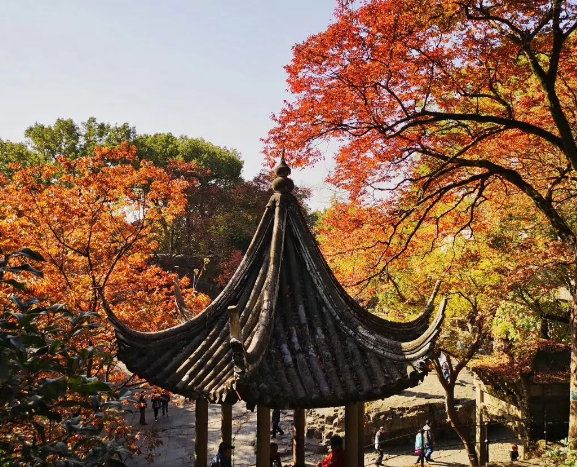
Reasons to visit
A popular tourist destination that is known for its natural beauty as well as historical sites
Opening Hours
- 7:00am - 6:00pm
Tiger Hill (Hu Qiu) enjoys a reputation as 'the first scenic spot in the State of Wu', for Suzhou was once the capital of the State of Wu during the Spring and Autumn Period. It is where the King of Wu, He Lu, was buried after his death. The area was named Tiger Hill after a tiger was seen lying on the tomb of He Lu. With a history of more than 2,500 years, the Huqiu has been known as No. 1 Sight of Suzhou. Tiger Hill, which is 34 meters hight and about 5 kilometers from Suzhou downtown, is a must see for tourists, for its natural beauty as well as historical sites.
Visitor Information
Basic Facts
- English Name: Tiger Hill, Huqiu Mountain Scenic Area
- Chinese Name: 虎丘山 / 虎丘山风景名胜区
- Built in: 496 A.D.
- Ticket Price: about CNY 70
- Opening Hours: 7:30am – 6:00pm
- Address: No. 8, Hushanmen Inner Street, Gusu District, Suzhou, Jiangsu Province, China
- Famous Spots: Yunyan Pagoda, Sword Pond, Thousand People Rock
- Suggested Visiting Time: about 3 hours
Travel Tips
- From March to May, Tiger Hill hosts a Flower Festival, where peonies, tulips, and other rare blossoms are in full bloom.
- From September to October, the traditional Tiger Hill Temple Fair takes place, often accompanied by folk performances, adding festive charm to the visit.
- Audio guides are available for rent at both the North and South Visitor Centers for around CNY 35. Hiring a professional guide is recommended for a deeper understanding of Tiger Hill and Suzhou culture.
- From the South Gate, visitors can take a boat ride to Shantang Street. A night cruise is especially recommended, offering enchanting views of the Jiangnan water town under soft evening lights.
How the Scenic Area is Organized
The scenic area of Tiger Hill is divided into three main parts: the Front Hill, the Thousand People Rock area, and the Hilltop. The traditional saying goes, “the front hill is beautiful, the back hill is serene,” and a full tour usually follows this sequence. In recent years, several new attractions have been restored or opened based on historical records, including Xixi Huancui, Wanjing Villa, and Lengxiang Pavilion.
- Front Hill: Tou Shanmen, Broken Beam Hall, Yongcui Villa, Hanhan Spring, Sword-Testing Rock, Pillow Stone, Zhenniang Tomb, Lengxiang Pavilion
- Thousand People Rock Area: Sun Wu’s Drill Ground, Thousand People Rock, Sword Pond, Two Immortals Pavilion, Third Spring, Ruins of Stone Guanyin Hall
- Hilltop Area: Yunyan Pagoda, Grand Hall, Calligraphy Terrace with Pine Shadows, Small Wudang, Tea Fragrance in the Clouds, Sengong Lecture Terrace
- Newly Added Scenic Spots: Xixi Huancui, Wanjing Villa, Zhishuang Pavilion, Yixie Garden
Main Attractions to See
【Yunyan Pagoda】虎丘塔
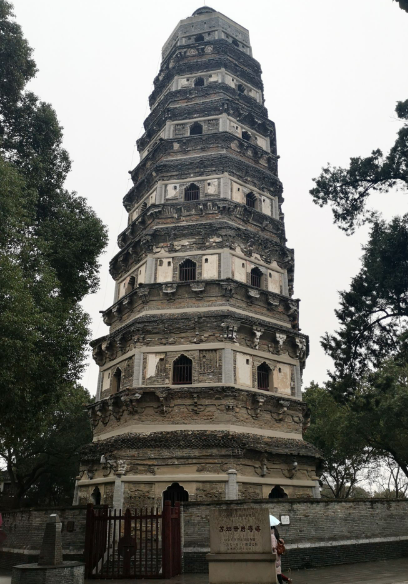
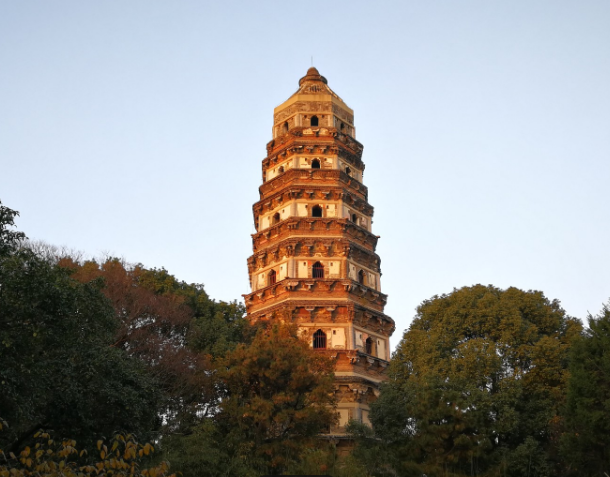
Tiger Hill also houses the Yunyan Pagoda that has been leaning since before the Qing Dynasty. It is said that the tower has been leaning since its completion in 959 - 961 A.D. The tower is 48 meter tall brick pagoda with seven stories and eight sides. It was constructed earlier and taller than the Leaning Tower of Pisa. It leans to the north by about 3.5 degrees. The tower was partially repaired in 1981 by the local government. Concrete piles have been driven into the ground around the pagoda in order to reinforce the foundation. Like many pagodas of the Tang and early Song periods, it is a stone imitation of earlier (or contemporary) wooden pagodas. The "brackets" and "lintels" carved on the surface are not structural, but decorative. Today this 1000-year-old (from the Sui Dynasty) pagoda has become a symbol of Suzhou.
【Sword Pond】剑池
Sword Pond (Jianchi): a small rectangular pond and one of Tiger Hill most famous spots. He Lu was a famous warrior and sword collector and the Sword Pond is said to hold He Lu treasured swords in its watery depths, beneath which a treasure of some 3000 swords are believed to have been buried; this site is not excavated because the Leaning Pagoda's foundations rest on the site.
【Yongcui Mountain Villa】拥翠山庄
Located on the southern side of Tiger Hill, Yongcui Mountain Villa is a refined and elegant garden known as Suzhou’s only hillside garden. Built during the Guangxu period of the Qing Dynasty, it was funded by several prominent figures of the time. The villa is famous for its clever use of terrain, with four terraced platforms that create a distinctive stepped garden design. Unlike most classical gardens of Suzhou, it is notable for its lack of water features, which makes it unique in the region.
【Sword-Testing Rock】试剑石
The Sword-Testing Rock is a massive boulder split cleanly into two parts. According to legend, King He Lu of Wu tested the sharpness of the famed Mo Xie sword here, slicing the stone with a single strike. In fact, geologists explain that the rock is tuff formed by volcanic activity, naturally weathered along fissures to create a cleft that strikingly resembles a sword cut.
Viewed from above, Sword Pond resembles a sword lying flat. Steep rock walls enclose a small rectangular pool of water. Carved on the cliff are the words “Tiger Hill Sword Pond,” attributed to the famous Tang calligrapher Yan Zhenqing, though modern scholars believe the inscription was actually written by his son Yan Yun. Legend has it that King He Lu of Wu was buried here with 3,000 swords, making the pond a supposed hiding place of priceless treasures. Though many rulers tried to retrieve them, the mystery remains unsolved to this day.
Broken Beam Hall 断梁殿
Broken Beam Hall serves as the second gate of the ancient temple on Tiger Hill. Built in 1344 during the Yuan Dynasty, the hall is unique because its main beam is not carved from a single piece of wood but instead joined from two separate timbers, leaving a visible seam in the middle. This unusual structure gave the hall its name. Inside, four precious stone steles are preserved, recording the history of Tiger Hill and the construction of Yunyan Pagoda.
Hanhan Spring 憨憨泉
Hanhan Spring is an ancient well with over 1,400 years of history. According to legend, a monk named Hanhan, who lived during the Liang Dynasty, discovered the spring. At the time, the hill lacked water, making it uninhabitable. Through persistent effort, Hanhan struck the rock until a spring emerged, providing a vital water source.
Wanjing Villa (Bonsai Garden) 万景山庄(盆景园)
Situated on the southeastern slope of Tiger Hill, Wanjing Villa occupies 24 acres and was once the site of Dongshan Temple. Today, it is a bonsai garden showcasing over 600 masterpieces of Suzhou-style bonsai, divided into tree-stump and water-and-stone categories. Suzhou bonsai, originating in the Tang and Song Dynasties and flourishing during the Ming and Qing, is considered one of the most important schools of Chinese bonsai art.
Zhenniang Tomb 真娘墓
Zhenniang, born Hu Ruizhen, was a talented woman from the north who fled to Suzhou during the An Lushan Rebellion. Forced into a brothel, she became famous for her beauty, poetry, and singing. When a wealthy youth named Wang Yinxiang tried to buy a night with her, she chose death over dishonor, hanging herself to preserve her virtue. Moved by her story, Wang held a grand funeral for her at Tiger Hill. The renowned poet Bai Juyi, then governor of Suzhou, even wrote her epitaph. Her tomb and a memorial pavilion remain on the hill.
Thousand People Rock 千人石
Thousand People Rock is a massive natural stone platform covering several acres. According to legend, Sun Wu once drilled troops here. The rock also features the Duobao Stone Sutra Pillar, a Buddhist monument modeled after a Dharani pillar, engraved with Buddhist scriptures and figures.
Two Immortals Pavilion 二仙亭
Located at the southeastern corner of Thousand People Rock, this pavilion was first built during the Song Dynasty and has been rebuilt several times, with the current version dating from the Qing Dynasty. Constructed entirely of granite, it is also called the Stone Pavilion. Its simple yet elegant design harmonizes beautifully with the surrounding landscape.
Lengxiang Pavilion 冷香阁
Built in 1917 and surrounded by plum groves, Lengxiang Pavilion is especially enchanting in February and March when plum blossoms bloom. The delicate fragrance fills the air, creating a poetic atmosphere that attracts many visitors and artists.
Daxiong Hall (Great Buddha Hall) 大雄宝殿
The Daxiong Hall, located beneath the Tiger Hill Pagoda, is the only surviving Buddhist hall of the ancient Yunyan Temple. Its grand stone staircase enhances its solemn atmosphere. Inside, the statues, murals, and carved wooden plaques crafted by Suzhou artisans exemplify exquisite workmanship. Today, it remains an important place for worship and prayer.
Yixie Garden (Waterside Pavilion Garden) 一榭园(水榭)
Situated near the North Gate of the scenic area, Yixie Garden is a small but charming classical Jiangnan-style garden with elegant pavilions and waterside views. Its origins trace back to the Qing Dynasty, when the renowned scholar Sun Xingyan acquired and restored the property in 1806. The name “Yixie” comes from a poem by Wu Zhouqian: “A pavilion where the fresh breeze keeps the dust away, with lotus flowers drifting outside the railing.”
Touring Options and Recommended Routes
Visitors can explore Tiger Hill in several ways: by taking a traditional rowboat, a sightseeing shuttle, or simply walking. Among these, walking is highly recommended. The scenic area is neither large nor steep, and walking allows travelers to fully appreciate the diverse landscapes and historical relics along the way.
There are two suggested routes for touring Tiger Hill:
Classic One-Day Route
Enter through the South Gate → Broken Beam Hall (断梁殿) → Hanhan Spring (憨憨泉) → Sword-Testing Rock (试剑石) → Thousand People Rock Square (千人石广场) → Sword Pond (剑池) → Yunyan Pagoda (虎丘塔) → Two Immortals Pavilion (二仙亭) → Yongcui Mountain Villa (拥翠山庄) → Exit from the North Gate.
In-depth Cultural Experience Route
Enter through the South Gate → Tomb of Zhenniang (真娘墓) → Broken Beam Hall (断梁殿) → Hanhan Spring (憨憨泉) → Senggong Lecture Platform (生公讲台) → Thousand People Rock Square (千人石广场) → Sword Pond (剑池) → Yunyan Pagoda (虎丘塔) → Back Hill Area (后山).
How to Get to Tiger Hill
The Tour Bus 1 and Tour Bus 2 started from the railway station and the North Bus Station respectively may reach the sight directly; If starting from the South Bus Station, tourists may take the Bus Line 103, and then turn to Tour Bus 1 or Tour Bus 2; The other lines are the Bus Line 8, Bus Line 949, Bus Line 32, Bus Line 146.