How to Plan a Silk Road Tour?
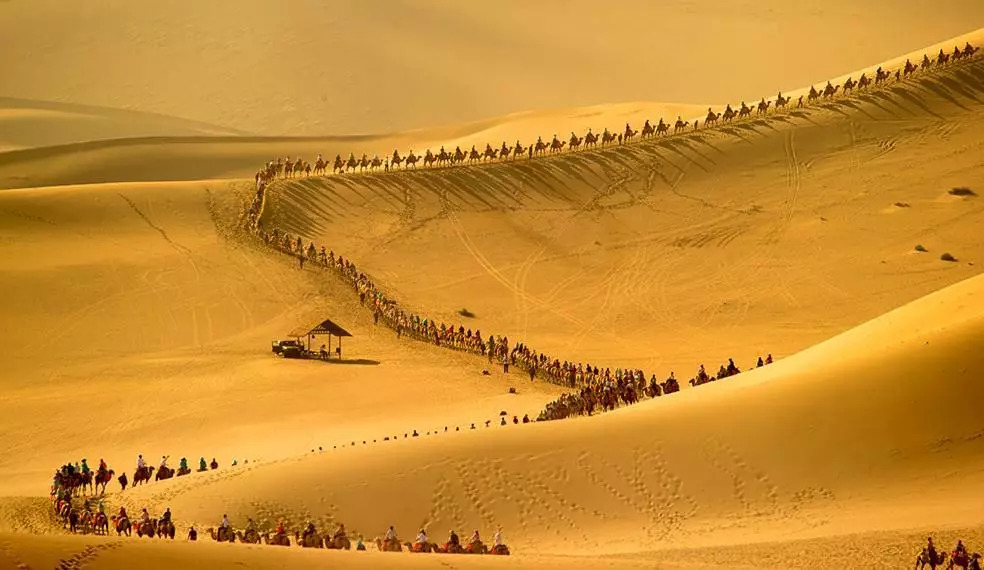
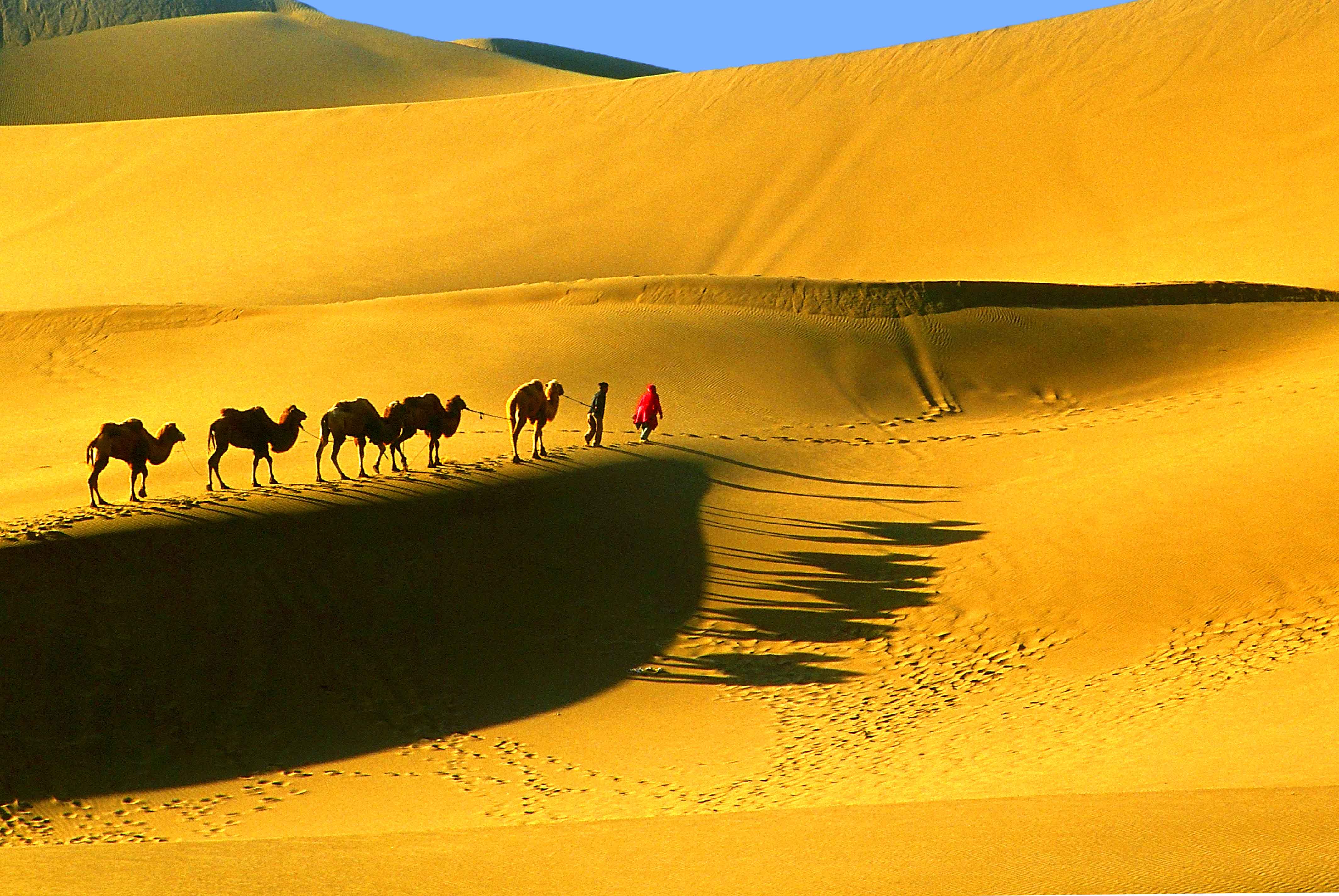
The Silk Road was an ancient trade route linked China with Europe which stretches more than 4,000 km in China passing Xi’an, Lanzhou, Xining, Zhangye, Jiayuguan, Dunhuang, Turpan, Urumqi and Kashgar. Want to explore the mysterious Silk Road in China? Follow the footprints of Marco Polo to discover the colorful history, ancient culture and marvelous natural beauty along the Silk Road, it must be one of the most unforgettable memories in your life. How to plan a Silk Road tour? Information below including the best time to go, places to go and travel tips, which may help you easily work out your Silk Road travel plan.
Reading Guideline:
- Best Time to Go
- Top Cities to Visit
- How to Arrange a Silk Road Tour
- How to Travel along Silk Road
- What to Eat
- Accommodation Tips
- Travel Tips for a Silk Road Tour
- Basic Chinese You Might Need
Best Time to Go
Stretching from Xi’an to Xinjiang, beautiful views along Silk Road vary from each season. According to different geographic conditions and climate of those main cities along the Silk Road, the best time to have a Silk Road tour may be from May to October, especially in May, September and October, since summer in the desert is really hot while winter is freezing cold, but you may enjoy a great view of green grassland and colorful flowers during summer,
Highlights:
| Qinghai Lake | Ili Grassland | Kanas Lake | Mt. Huashan | Fruits in Turpan |
| July and August | June | September | April to October | September |
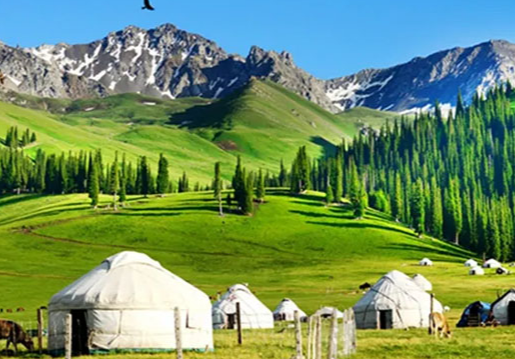
Ili Grassland
Notice:
Better to avoid these periods since the price for hotel and transportation may be higher and it’s crowded everywhere.
- Late Jan. or early Feb. (Chinese Spring Festival)
- First week of May (Labor Day)
- First week of October (National Day)
Top Cities to Visit
Xi'an
Xi’an, the capital city of Shaanxi Province and the starting point of Silk Road, is a world-famous historical city with a long history of more than 1,100 years as the capital, the political, cultural and economic center of ancient China. The most famous Terracotta Warriors, which is one of the World’s Eight Wonders, the Big Wild Goose Pagoda, Xi’an City Wall, Mt. Huashan and plenty of historical sites, Xi’an offers so many chioces for you to explore both beautiful natural landscapes and splendid culture.
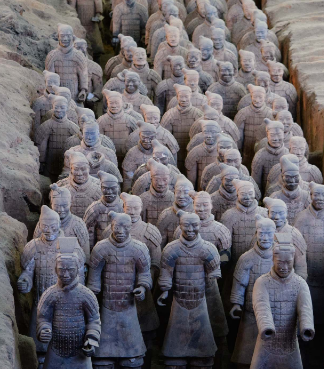
Terracotta Army
Xining
Xining, as the capital city of Qinghai Province, is also an important center of the northwest China and a gateway to Qinghai-Tibet Plateau. This is the hub to visit the Qinghai Lake, which is the largest inland lake in China. During July and August, a wonderful picture of the azure blue lake surrounded by the blossoming rape flowers around will be captured along your Silk Road tour. Cultural sites like Taer Monastery and Dongguan Mosque can also be put on your visiting list.

Qinghai Lake
Zhangye
Zhangye, renowned for its unique geographic landscape of Danxia Landform, is an important stop along the ancient Silk Road which is located in Gansu Province. Mati Temple Grottoes will be a good choice if you’re interested in murals and Buddhism culture.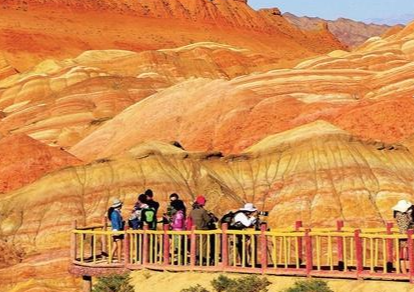
Zhangye Danxia Landform
Jiayuguan
Jiayuguan, located in Gansu Province, is another important city along the ancient Silk Road. Jiayuguan Pass is the western starting point of the Great Wall in Ming Dynasty, it is also one of the Three Wonders of the Great Wall, along with Shanhaiguan Pass and Juyongguan Pass.
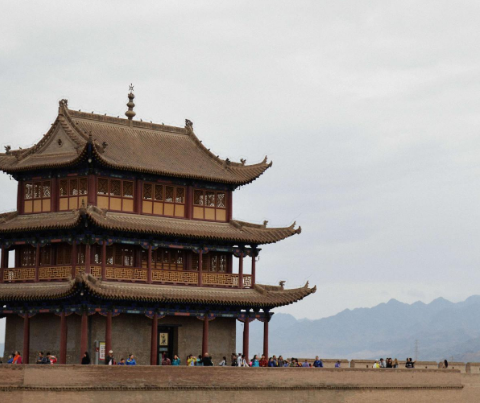
Jiayuguan
Dunhuang
Dunhuang, a well-known historical city situated in Gansu Province, is the gateway to Xinjiang. What makes Dunhuang so famous around the world must be the Mogao Grottoes which is the largest, oldest and also the best preserved Buddhist grottoes in the world, and the Crescent Spring of Mingsha Hill, a great place to experience particular sceneries in the desert.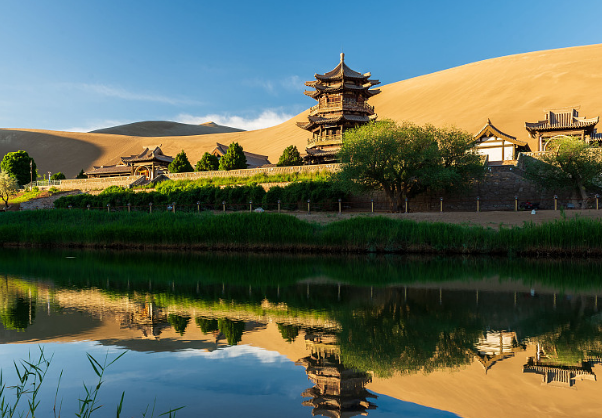
Crescent Spring of Mingsha Hill
Turpan
Turpan, oasis of the desert located at the middle area of Xinjiang, is a marvelous place with the fusion of both ancient and modern civilization where the eastern culture and western culture merge with religion culture. Gaochang Ancient City, Karez Well and Flaming Mountains, here you can not only explore the historical culture and natural scenery, the abundant fruits in Turpan is another attractive reason, especially grapes.
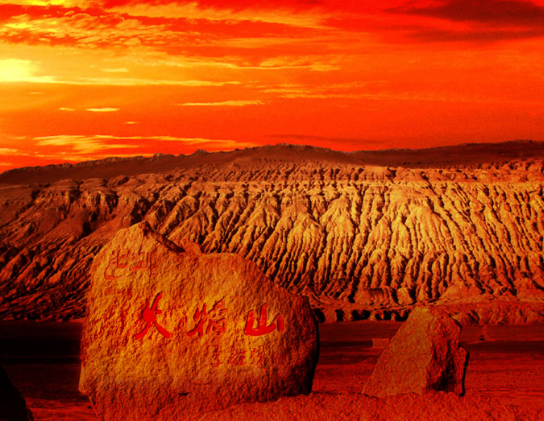
Flaming Mountains
Urumqi
Urumqi, the capital city of Xinjiang, is the farthest city from sea in the world. The rich ethnic culture and customs of Uygur ethnic group and varieties of ethnic groups make Urumqi more attractive. Furthermore, natural sceneries in Urumqi are also top reason for a visit, such as the wonderful Tianchi Lake, Southern Pasture and Ili Grasslands. And you can go to Kanas Lake from Urumqi, which is regarded as the most beautiful lake in China.
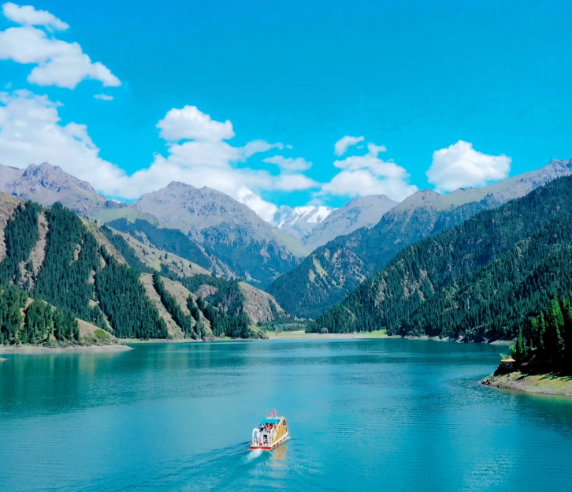
Tianchi Lake
Kashgar
Kashgar, where the South Silk Road and North Silk Road meet in the ancient times, is an important hub for the cultural and economic communication between China and western countries. Go around Kashgar Old Town to experience the long history and rich culture of Kashgar, or go to Karakul Lake to appreciate its extraordinary beauty will be your unforgettable memory during your Silk Road tour.
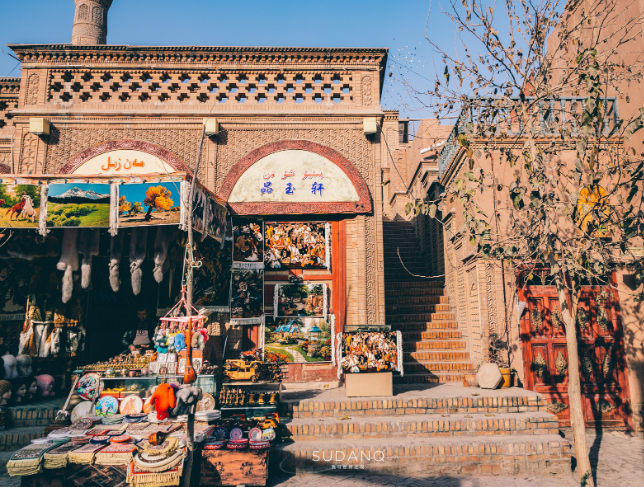
Kashgar Old Town
How to Arrange a Silk Road Tour
Choose cities and main attractions you’re interested in first, so that you can plan your travel length and decide how long to stay in each city, then you could easily figure out your travel route. Most of people would like to start their Silk Road tour from Xi’an while some people prefer to begin from Urumqi, just decide your starting point according to your situation.
If you have a really tight schedule, choose part of the route. Xinjiang will be an ideal choice for you to discover the history, culture and the beautiful sceneries along the road. Take tours information below to find some planning ideas.
If you have heard about the mysterious Kanas Lake, just go there to find out the myth and enjoy the amazing landscape of the most beautiful lake in China.
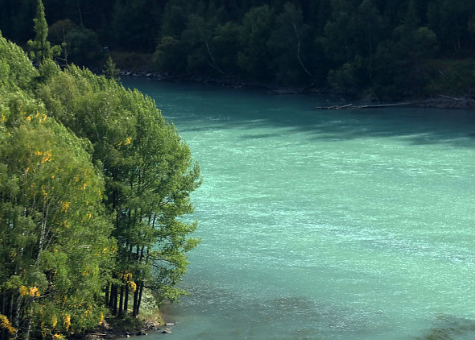
Kanas Lake
How to Travel along the Silk Road
Transportation along the Silk Road are mainly by air, train and car. Tourists usually start their trip from Xi’an which is easily approaching from other big cities in China, also available for international airlines from Korea, Thailand, Japan and Singapore. Recently more and more tourists prefer to have a road trip in order to better explore the sceneries along the way. Transportation information below may help you decide the best way to travel along the Silk Road according to your schedule.
►From Xi’an to Xining, 4-5 hours by high-speed train, one and half hour by plane.
►From Xining to Zhangye, about 2 hours by high-speed train, airplane to Zhangya is only available in Lanzhou and Chongqing.
►From Zhangye to Jiayuguan, 1 h 20 m by high-speed train, it’s available to get to by air from Beijing, Shanghai, Xi’an and Lanzhou.
►In Dunhuang, only normal train is available to take, 5 hours from Jiayuguan by normal train, 1 hour by air.
►In Turpan, you can transfer in Urumqi from most of cities in China and some international destinations from Thailand, Malaysia and Russia. And it’s only 1 hour from Urumqi to Turpan by high-speed train.
►In Kashgar, better to take plane since there is only normal train and it takes a long time, but just 2 hours from Urumqi.
What to Eat
Since there are lots of Muslim people gather in the northwestern area in China, food along the Silk Road are mainly Halal Food with strong flavor, based on beef, mutton and wheaten food. You may find Chinese food or western food in the downtown area of main cities. Xi’an Roujiamo, Mutton Paomo, Lanzhou Noodles, Beef Jerky, or Roasted Whole Lamb and Saute Spicy Chicken in Xinjiang are highly recommended.
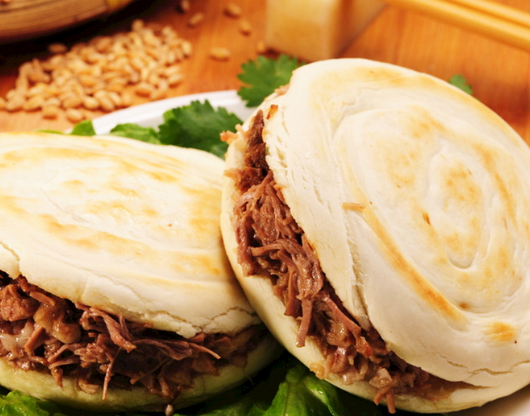
Roujiamo in Xi'an
Due to the dry weather in northwestern area, eat more fruits and vegetables will be better, however, vegetables in this area are more expensive so that there are less variety of vegetables to choose. But fruits in Xinjiang are incredibly good, you can taste numerous delicious fruits there, such as grapes, melons, pomegranates and apricots.
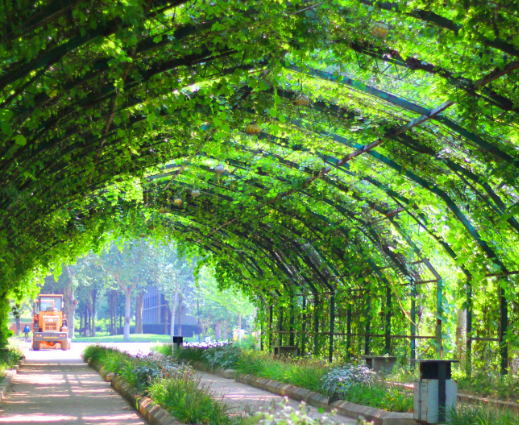
Grape Valley in Turpan
Accommodation Tips
►In Xi’an, near Xi’an City Wall or the Bell Tower will be good for eating and transportation, with all kinds of hotels to choose.
►In Xining, choose your accommodation in the city center, more convenient.
►In Zhangye, better stay near Zhangye Danxia Landform Park if you’re planning to watch sunrise, or else stay in the city center since Mati Temple Grottoes is the other direction from the park.
►In Jiayuguan, you may find lots of choices around the railway station and commercial streets.
►In Dunhuang, stay near Mingsha Hill will be a good choice, convenient for you to watch sunrise and sunset on the hill.
►In Turpan, most of the hotels in downtown area are along the main streets, such as Gaochang Road, Qingnian Road, lvzhou Road and Wenhua Road.
►In Urumqi, in Erdaoqiao area or near Hongshan Park.
►In Kashgar, accommodation in downtown area will be good.
Travel Tips for a Silk Road Tour
What to Prepare
- Get ready for your Visa, and do remember your passport.
- Prepare for your SIM card to make sure the internet use in China.
- Take some medicine with you for emergency use, Vitamin C is highly suggested.
- Bring sunscreen, sunglasses and hats for the strong ultraviolet ray in the desert.
- Be aware of the weather change along the Silk Road, pack enough suitable clothes, windproof jacket or outdoor jacket will be good.
- A pair of comfortable shoes is needed since a lot of walking involved.
- Take some snacks and fruits with you in case you can’t find what you want to eat.
What to Know
- Read some basic information about Silk Road history and Silk Road facts so that you could have a better experience there.
- Choose a good time for those attractions you want to visit the most, it may help you get a more wonderful time during your Silk Road tour.
- Respect the local customs and ethnic culture in each place.
- Weather along the Silk Road is really dry, remember to eat more vegetables and fruits, drink plenty of water.
- Local time in Xinjiang is two hours later than the standard time in China, better to arrange your schedule from 9 am to 8 pm.
Read more information about Silk Road Travel Tips.
Basic Chinese You Might Need
| Chinese | Pinyin | English |
| 你好 | Nǐhǎo | Hello/Hi |
| 再见 | Zàijiàn | Bye/See you |
| 谢谢 | Xièxie | Thank you. |
| 不客气 | Búkèqi | You’re welcome. |
| 对不起 | Duìbùqǐ | Sorry |
| 请问卫生间在哪里? | Qǐngwènwèishēngjiānzàinǎlǐ? | Excuse me, where is the restroom? |
| 多少钱? | Duōshǎoqián? | How much? |
Started from the ancient China capital city Changan (Xian at present), the Silk Route stretches more than 7000 kilometres reaching the Mediterranean bank. The route was first created by an envoy called Zhangqian assigned by the Emperor of the Han Dynasty to deliver gifts which were mainly silk to those local regimes in the past West China, to hold their loyalty and to be allies of the Han Dynasty. Since the Chinese highly qualified silk had made its fame to the western countries, the merchants sought the opportunity of trading Chinese silk along this route and gained a great fortune. Few people would really finish the whole silk route journey rather they just mainly traded in a certain period of certain local crafts such as silk, blanket and carpet etc to other merchants of other periods. Each time everybody marked the price up along the way. In the end, silk, perfume, jade and sliver from China, cotton from India, ivory from Saudi Arabic, spicy from Iran and olive oil and wine from Mediterranean bank were all traded along the Silk Road. Thousands and thousands people have taken part and numerous goods traded in this great international trade at that time. The main cities along the Silk Road had grown larger and more important in helping the trade and merchant and caravans. Cities like Changan, Dunhuang, Kashgar, Istanbul and Rome had gained great benefits along the trading process.
Today, Chinese president Xi Jinping has announced to invest 14 billion dollars to boost the new Silk Road program which has a rather poetic name called One Belt One Road. It is more like a modern version of the ancient Silk Road, call it the “Silk Road Plus” if you are an Apple fan. The “One Belt One Road” is aiming to help those connected regions in culture and economy exchange with a more advance road net work consisted by airplanes, railways, high ways and even container ships.
While the ancient Silk Road today is rather a historical travel route on which you can experience interesting history and enjoy exotic culture. The Chinese section Silk Road stretches more than 4,000km on the gigantic regions of northwester China, an almost dizzying agglomeration of desert, grassland, raging river and colossal mountains. The best highlights are a series of historical towns, ruins and cultural sites linked as a chain of pearls which are Terracotta Warriors in Xi’an, the Mogao Grottoes in Dunhuang, the Qinghai Lake in Xining, the Heaven Lake in Urumqi, the Gaochang Ancient City in Turpan, etc. There are also several ethnic groups regions along the silk route such as Mongolians, Huis, Uygurs and Hazaks who have maintained their unique traditions, cultures, living habits and religious beliefs embodying the culture exchange soul spirits of the Silk Road. All these magnificent ancient towns fulfilled with exotic cultures and mysterious history is waiting to present you a splendid Silk Road journey! Pack your baggage! Join us to trace the footprints of ancient travelers and create a unique Silk Road journey of your own!! Following are our detailed introduction, most read travel tips and best collection of Silk Road Tour Packages which are highly valuable, enjoyable and customizable!