Silk Road History
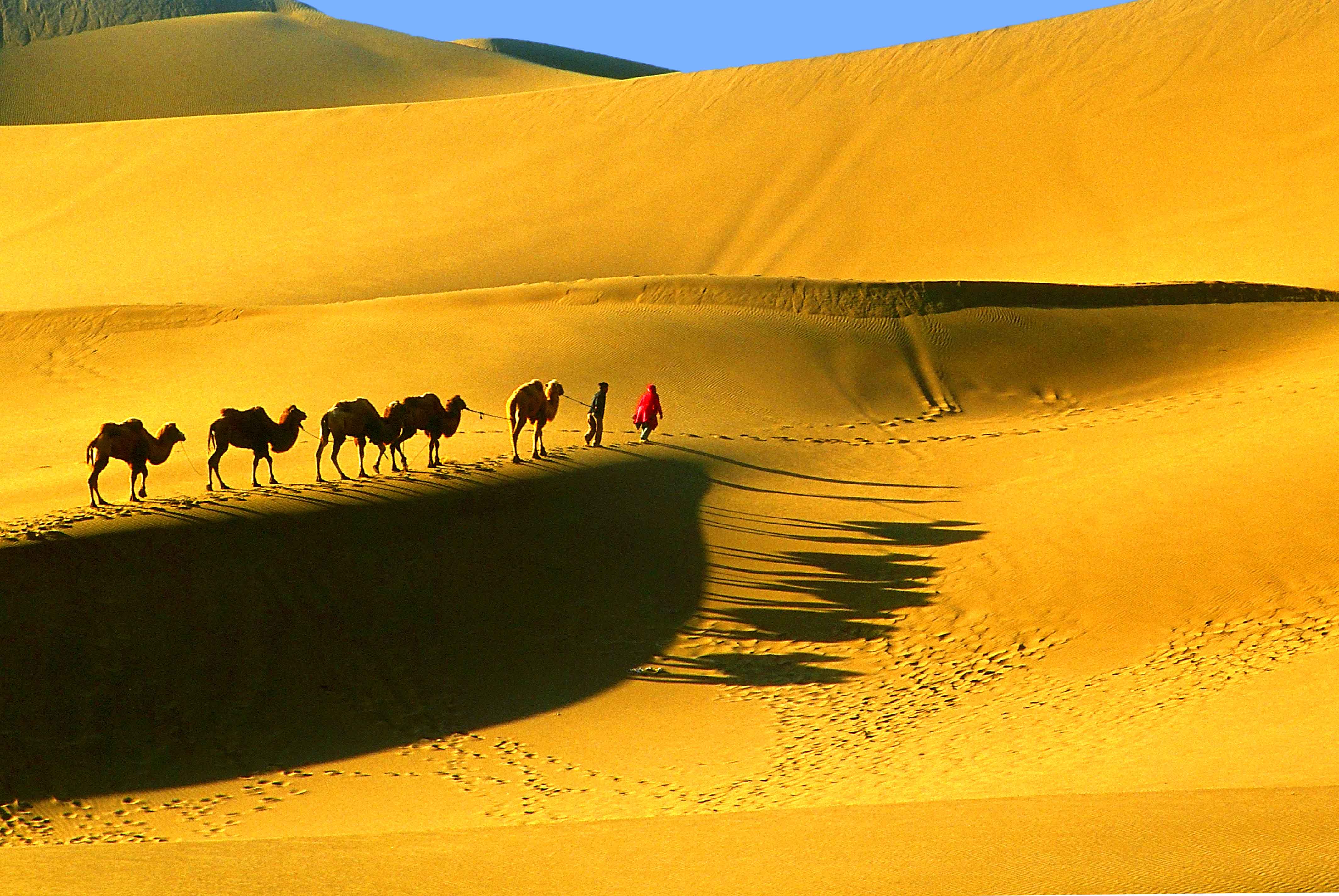
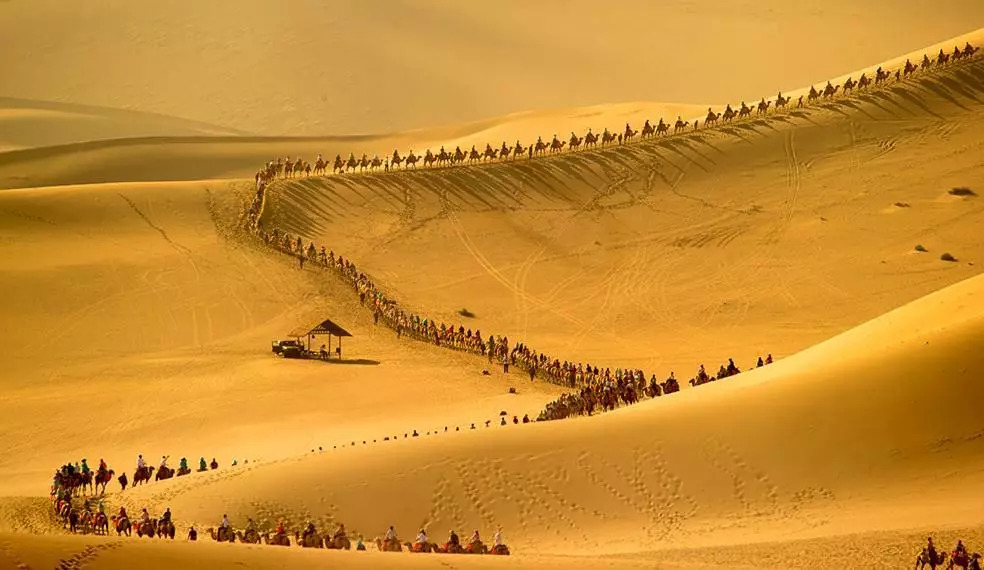
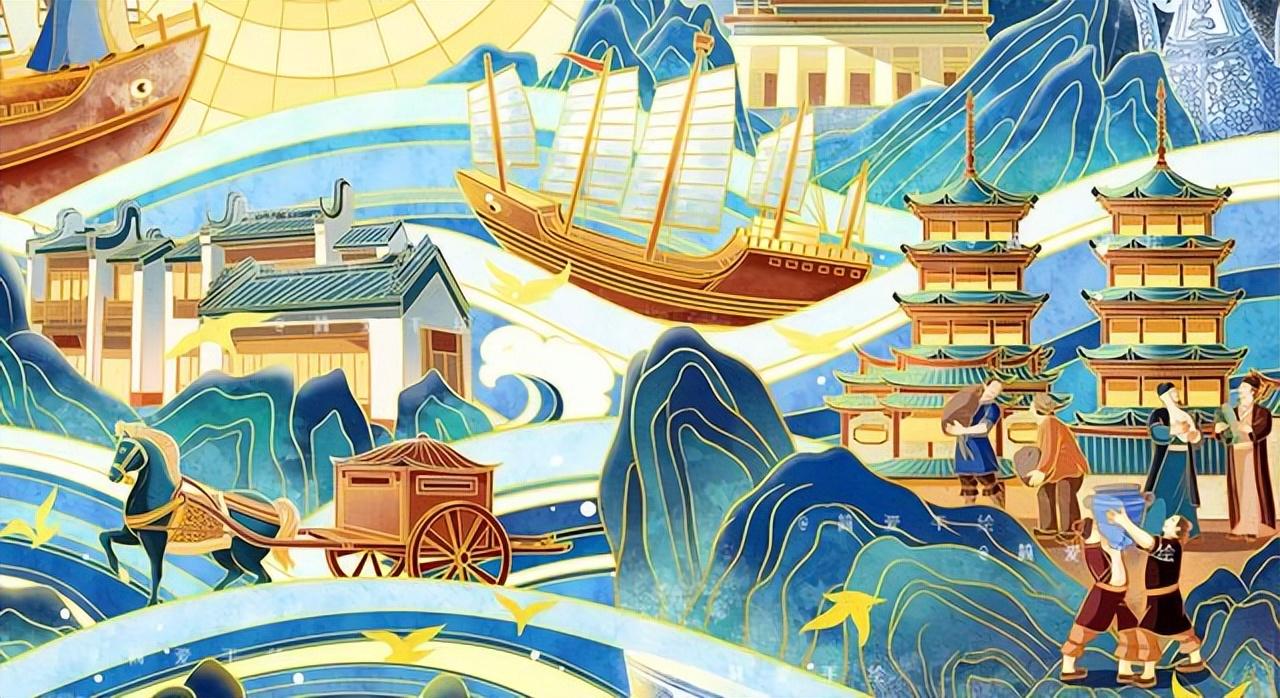
The merchants and Chinese silk were reaching Rome before the time of Christ. Through this Silk Road, the Chinese civilization was introduced to the Western countries and vice versa the Western culture came to the East. The Silk Road is a chapter recording the friendship between the European and Asian peoples. Traders of Chinese, Persians, Greeks, Syrians, Romans, Armenians and Indians...exchanged peculiar goods of their county, such as Chinese silk and tea, nephrite jade, spice, etc.
With a history more than 2,000 years, the Silk Route in China can be dated back to the Han dynasty (207 BCE – 220 CE) in ancient China. Though the Silk Road was mainly a trading route, it was started as a political mission in the first place. During the West Han Dynasty, the contemporary king Wu had sent an ambassador called Zhang Qian to visit western region countries to seek for potential allies to fight against the Huns which was a threat to central China in the north at that time. Zhang Qian brought a large amount of treasures from China which was mainly high quality exquisite silk to present to those kings and loads in west regions as a gift of good will. It was a treacherous journey and Zhang Qian didn’t succeed until the second time he made his journey west years later. He was a brave explorer, a brilliant diplomatist and the first man broke down the barriers between the ancient China, western regions and the central Asia. What he did made a great foundation to the Silk Route formation in later years.
In the following years in history, many great figures had made significant contributions to the development of the Silk Road. Alexander the Great founded the city of Alexandria Eschate during the Greek empire which later became a major staging point on the northern Silk Route. Not to mention those Chinese kings had subsequently sent numerous embassies to Syria, Anxi, Tiaozhi and Tianzhu over the years to keep the long-term trading connections with those Silk Road region countries. These connections marked the beginning of the Silk Route trade network had extended to the Roman Empire and the Silk Road finally reached its peak during the Byzantine Empire time in the west.
Today, the ancient Silk Road is more like a historical textbook for everyone to read and to catch about what happened during that ancient time. It played a significant role in the development of the civilizations of China, the Korea, Japan, the India, Persia, Europe, the Horn of Africa and Arabia, opening long-distance political and economic relations between the civilizations. In June 2014, UNESCO designated the Chang'an-Tianshan corridor of the Silk Road as a World Heritage Site. Silk Road in China now has brought great elegance to the tourism in China even in the world! Following our detailed instruction below, a splendid history of this ancient route is ready to unfold for you!
Started from the ancient China capital city Changan (Xian at present), the Silk Route stretches more than 7000 kilometres reaching the Mediterranean bank. The route was first created by an envoy called Zhangqian assigned by the Emperor of the Han Dynasty to deliver gifts which were mainly silk to those local regimes in the past West China, to hold their loyalty and to be allies of the Han Dynasty. Since the Chinese highly qualified silk had made its fame to the western countries, the merchants sought the opportunity of trading Chinese silk along this route and gained a great fortune. Few people would really finish the whole silk route journey rather they just mainly traded in a certain period of certain local crafts such as silk, blanket and carpet etc to other merchants of other periods. Each time everybody marked the price up along the way. In the end, silk, perfume, jade and sliver from China, cotton from India, ivory from Saudi Arabic, spicy from Iran and olive oil and wine from Mediterranean bank were all traded along the Silk Road. Thousands and thousands people have taken part and numerous goods traded in this great international trade at that time. The main cities along the Silk Road had grown larger and more important in helping the trade and merchant and caravans. Cities like Changan, Dunhuang, Kashgar, Istanbul and Rome had gained great benefits along the trading process.
Today, Chinese president Xi Jinping has announced to invest 14 billion dollars to boost the new Silk Road program which has a rather poetic name called One Belt One Road. It is more like a modern version of the ancient Silk Road, call it the “Silk Road Plus” if you are an Apple fan. The “One Belt One Road” is aiming to help those connected regions in culture and economy exchange with a more advance road net work consisted by airplanes, railways, high ways and even container ships.
While the ancient Silk Road today is rather a historical travel route on which you can experience interesting history and enjoy exotic culture. The Chinese section Silk Road stretches more than 4,000km on the gigantic regions of northwester China, an almost dizzying agglomeration of desert, grassland, raging river and colossal mountains. The best highlights are a series of historical towns, ruins and cultural sites linked as a chain of pearls which are Terracotta Warriors in Xi’an, the Mogao Grottoes in Dunhuang, the Qinghai Lake in Xining, the Heaven Lake in Urumqi, the Gaochang Ancient City in Turpan, etc. There are also several ethnic groups regions along the silk route such as Mongolians, Huis, Uygurs and Hazaks who have maintained their unique traditions, cultures, living habits and religious beliefs embodying the culture exchange soul spirits of the Silk Road. All these magnificent ancient towns fulfilled with exotic cultures and mysterious history is waiting to present you a splendid Silk Road journey! Pack your baggage! Join us to trace the footprints of ancient travelers and create a unique Silk Road journey of your own!! Following are our detailed introduction, most read travel tips and best collection of Silk Road Tour Packages which are highly valuable, enjoyable and customizable!