
The Central Axis of Beijing

Day 1The Central Axis of Beijing
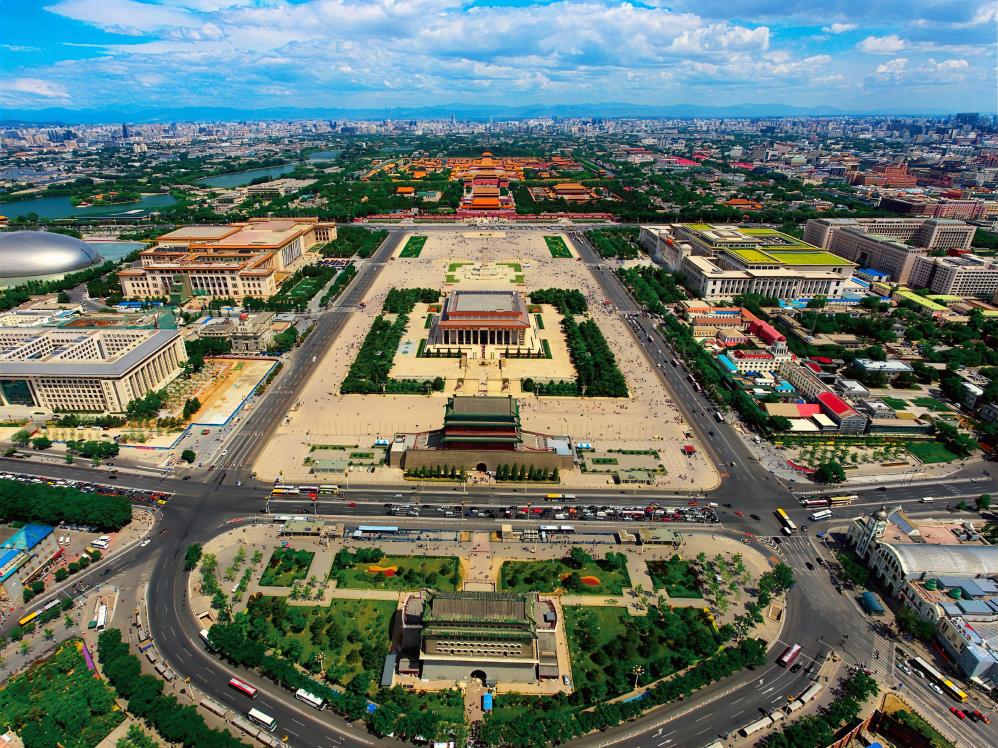
The Central Axis of Beijing is the axis of Beijing of the Ming and Qing Dynasty. Beijing urban planning has symmetrical features centered in the Forbidden City. Many buildings were built in the axis of symmetry of the city, called the Central Axis. The Central Axis of Beijing stars from Yongding Gate in the south to the Bell Tower in the north. The straight-line distance of it is about 7.8 km.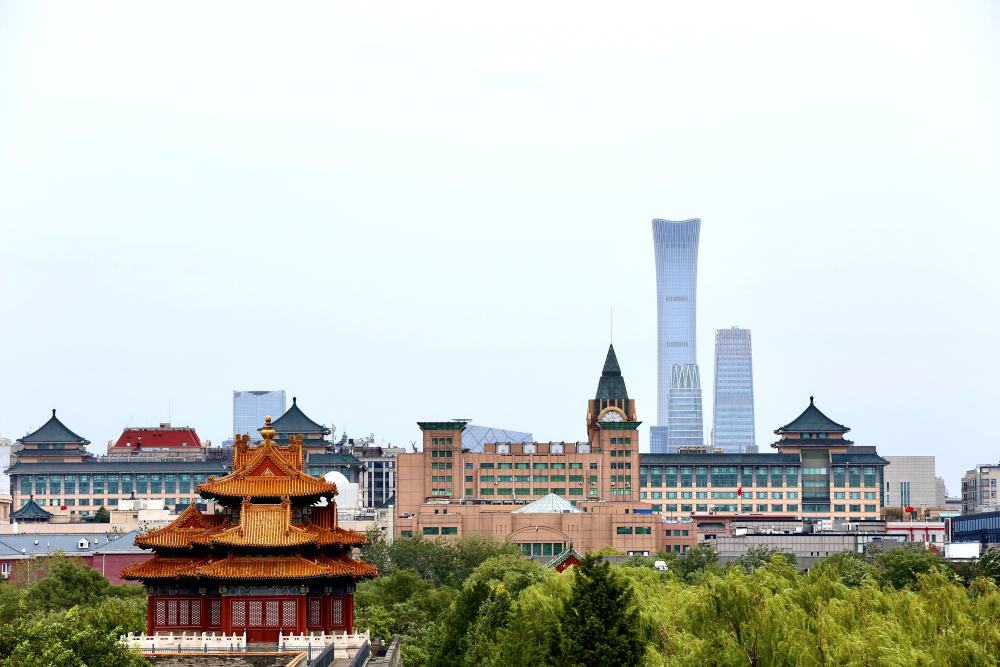
Origin of the Central Axis of Beijing
The Central Axis of Beijing was officially formed in Yuan Dynasty. It was located in the center line of old Drum Tower Street the axis and the southern extension line of it at that time. It passed the center of the palace in the east of Taiye Lake. To the Ming dynasty, the kind made the Beijing central axis move eastward by 150 meters, and it eventually formed the layout of today.
The establishment of the axis aims to emphasize the centrality of the feudal emperors at that time, as the name of China means the "central country of the world". Overall urban layout of the city is center with this central axis, with the imperial ancestral temples to the left, altars of Land and Grain to the right, the courts in front of it and the markets behind. Thus, Beijing is one of the brilliant cities in the world with the most brilliant urban layout.
Layout of the Central Axis of Beijing
The Central Axis of Beijing starts from outer urban Yongding Gate in the south, via the inner urban Qianmen Gate, Zhonghua Gate, Tiananmen, Duanmen Gate, the Meridian Gate, Gate of Supreme Harmony, then go through the Hall of Supreme Harmony, the Hall of Preserving Harmony, Palace of Heavenly Purity, Palace of Earthly Tranquility, Gate of Divine Might, cross Longevity Hill, Shouhuang Temple, Drum Tower, and leads to the Bell Tower in the center. This axis connects four important places of the city, that is, the outer urban Beijing, the inner urban Beijing, the Imperial City and the Forbidden City. It is like the backbone of Beijing city. It reflects the thought of the "unique” of the feudal emperors.
In addition, the Temple of Heaven, Xiannongtan Altar, Dongbianmen Gate, Chongwen Gate, Xuanwu Gate, the Imperial Ancestral Temple, Donghua Gate, Xihua Gate, Xizhimen Gate, Dongzhimen Gate, Andingmen Gate and Deshengmen Gate are distributed symmetrically with the symmetry axis. All royal palaces, altars, government office and other important government buildings are attached together with this axis. The buildings are both a symbol of the ancient capital of Beijing, and it is a symbol of Chinese civilization.
Traveler's Guide to Exploring Beijing's Central Axis
Building upon the historical and architectural foundation outlined above, this guide is crafted specifically for international travelers seeking to experience the majesty of Beijing's Central Axis firsthand. More than a line on a map, the Axis is a 7.8-kilometer walk through the heart of Chinese imperial history, philosophy, and urban design. Here’s how to plan your journey.
Pre-Visit Essentials
- Timing is Key: Aim for spring (April-May) or autumn (September-October) for pleasant weather. The scale of the axis involves significant walking, and these seasons are most comfortable. Start your walk early in the morning to avoid the largest crowds, especially at sites like the Forbidden City, which require timed entry.
- Ticketing: Crucially, most major sites along the Axis require online booking in advance. This includes the Forbidden City (Palace Museum), Temple of Heaven, and Jingshan Park. Use official WeChat mini-programs (some have English interfaces) or trusted travel platforms. For the Forbidden City, book as soon as tickets become available (usually 7-10 days in advance), as they sell out quickly. Always carry your passport, as it's linked to your ticket.
- Navigation: Download a reliable map app like Amap or Baidu Maps, which offer English versions and real-time public transport routing. The Axis is a north-south corridor, making it conceptually easy to follow.
South-to-North Itinerary
While the historical axis runs south to north, your practical itinerary can be flexible. A logical and impactful approach is to travel from south to north, mirroring the historical "approach" to the imperial seat of power.
1. Yongdingmen & Temple of Heaven Area
Start at Yongdingmen Park: This reconstructed southern gate marks the official start. It’s less crowded and offers a quiet introduction. The park itself is a local favorite for morning exercises.
Detour East to the Temple of Heaven: A short taxi or subway ride away, this is a must-visit and a masterpiece of symbolic architecture. While not on the central axis itself, it was symmetrically balanced by the Altar of Earth (in the north) and is essential for understanding the "Altars to the Left (East)" principle.
2. Tiananmen Square & Forbidden City
Proceed north to Tiananmen Square, the world's largest public square. From here, admire the five-arched Tiananmen Gate (Gate of Heavenly Peace), the national emblem at its top glinting in the sun. This is the iconic southern entrance to the Forbidden City. Tip for Travelers: Security checks here are thorough; keep your passport handy and avoid large bags.
Enter the Forbidden City (Palace Museum), the axis's magnificent core. Allow at least 3-4 hours. Follow the central path through successive gates and courtyards – the Meridian Gate (Wu Men), the Gate of Supreme Harmony (Taihemen), and onto the three great halls standing on marble terraces. This progression was designed to physically and psychologically reinforce the emperor's supreme authority. Insight: Notice the color palette – the overwhelming yellow-glazed tiles (symbolizing the emperor) and the vermilion red pillars and walls (representing happiness and virtue). After exploring the central halls, consider wandering into the quieter Eastern and Western Palaces to glimpse imperial daily life.
3. Jingshan Park
Exit the Forbidden City through the north gate (Shenwumen) and cross the street to Jingshan Park. The climb to the pavilion on its summit is short but rewarding. This artificial hill was created from earth excavated to build the Forbidden City's moats. From the top, you are rewarded with the guidebook's quintessential photograph: an unparalleled south-facing bird's-eye view of the Forbidden City's golden roofs laid out perfectly along the axis, a breathtaking testament to the symmetrical planning you've just walked. Local Flavor: The park is a hub of local life in the early morning and evening, with groups practicing tai chi, dancing, or playing traditional instruments.
4. The Drum and Bell Towers & Olympic Extension
Continue north through the historic hutongs of the Shichahai area to the Drum Tower (Gulou) and Bell Tower (Zhonglou). These structures once served as the city's ancient timekeeping center. Climb the steep stairs of the Drum Tower for a view over the gray-tiled rooftops of the hutongs and to watch the drum performance. The acoustics of the Bell Tower are equally impressive.
Looking North – The Modern Axis:For a fascinating contrast, venture further north to the Olympic Park. Here, the ancient axis conceptually extends into the modern era, symbolized by the towering Olympic Tower (Ling Long Pagoda) and framed by the National Stadium ("Bird's Nest") to the east and the National Aquatics Center ("Water Cube") to the west. This modern interpretation demonstrates the axis's enduring role as a foundational element in Beijing's urban narrative.
Beyond the Monuments: Experiencing Axis Life
Hutongs & Local Cuisine: The lanes (hutongs) east and west of the axis are its living, breathing counterpart. Consider a ricksaw tour or a guided walking tour through the Nanluoguxiang or Houhai areas. This is the place to try Beijing's street food – from sizzling lamb skewers (chuanr) to the sweet, frozen delight of tanghulu (candied fruit).
Cultural Etiquette: A quiet nod or a simple "Xiexie" (Thank you) is appreciated. When bargaining in markets, do so with a smile. Patience is valued, especially in crowded places.
Practical Concluding Advice
Completing the full 7.8-kilometer walk in one day is not easy. A more immersive experience is to split the journey over two days: the southern part (Temple of Heaven to Forbidden City) on one day, and the northern part (Jingshan Park to the Drum & Bell Towers, plus hutongs) on another. Wear comfortable walking shoes, stay hydrated, and keep your phone charged for maps and digital tickets.
Price Includes
Inclusions information is being updated.
Price Excludes
Exclusions information is being updated.

Useful Information
Why Choose Us
💬 Traveler Reviews

Free Inquiry & Tailor-made Tour
Reply within 24 hours. Your travel data is 100% private.