Chinese Philosophy & Religion
By Admin
Jun 15, 2026
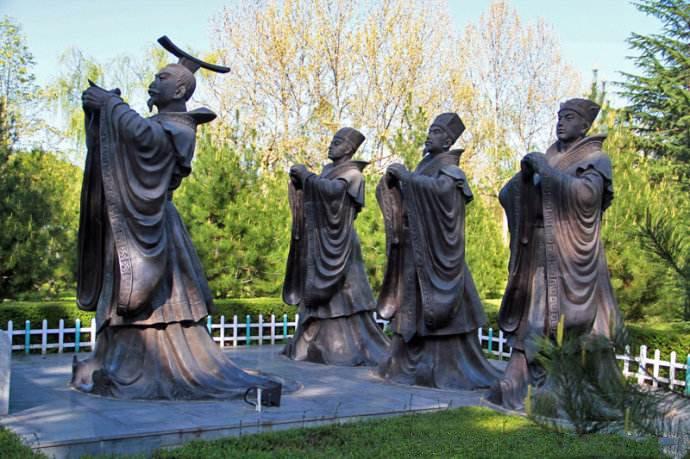
Chinese Philosophy & Religion
The profound cohesion and enduring vitality of Chinese civilization are largely shaped by three core spiritual traditions: Confucianism, Taoism and Buddhism. For more than two millennia, these three belief systems have intertwined, complemented and influenced one another, forming the spiritual backbone of Chinese culture. Their impact extends far beyond China’s borders, profoundly shaping the social ethics, political systems, daily customs and artistic creations of Korea, Japan, Vietnam and other East Asian and Southeast Asian regions.
Modern China embraces diverse beliefs. Apart from the three major traditional philosophies and religions, many people follow other faiths introduced from overseas, including Protestantism, Catholicism and Islam. Additionally, numerous unique religions and folk beliefs have been preserved among China’s 56 ethnic groups. Though China upholds the freedom of religious belief, traditional philosophies still remain deeply rooted in people’s minds and continue to guide daily behaviors and social interactions. Below is a detailed introduction to mainstream philosophies, religions, representative sites and cultural relics.
Confucianism
Confucianism is more of a comprehensive philosophy, ethical system and social code than a pure religion. Founded by the great thinker Confucius in the 6th–5th century BCE, it took shape on the basis of ancient rituals and moral norms of the Zhou Dynasty, and matured during the Spring and Autumn and Warring States Periods. It was officially respected as the dominant ideology in the Han Dynasty and has governed Chinese social order for over 2,000 years.
Core Doctrines & Values
The highest virtue of Confucianism is Ren (Benevolence), which means loving others and treating people with kindness and empathy. Another key principle is Li (Rites and Propriety), which refers to standardized etiquette, rituals and behavioral norms that maintain social order. It advocates the famous golden rule: "Do not do to others what you do not want done to yourself".
Confucianism stresses the Five Fundamental Relationships: ruler and subject, father and son, husband and wife, elder brother and younger brother, and friend and friend. Each relationship has corresponding duties and respect standards. Filial piety to parents and loyalty to superiors are regarded as the most basic moral virtues. It also encourages self-cultivation, integrity, modesty and pursuit of moral perfection, aiming to cultivate ideal personalities known as Junzi (Gentlemen).
Classic Works & Cultural Influence
The core classics include The Analects, Mencius, The Great Learning, The Doctrine of the Mean, The Book of Songs and The Book of Rites. For thousands of years, these books were compulsory textbooks for ancient scholars and the main content of imperial civil service examinations, determining the selection of government officials.
Confucianism is not centered on worshipping deities. Instead, it emphasizes ancestor worship and respecting ancient sages. The annual Confucius Ceremony held at Confucius Temple in Qufu, Shandong, is a grand traditional ritual to commemorate Confucius, attracting numerous visitors and cultural enthusiasts every year. Its ideas about family, education and harmony still influence modern Chinese society deeply.
Taoism
As the only indigenous religion born and developed entirely in China, Taoism originated from ancient nature worship, ghost worship and immortal beliefs. Its philosophical prototype was founded by Laozi in the Spring and Autumn Period, and it evolved into a formal organized religion in the Eastern Han Dynasty, when Zhang Daoling established the Way of the Five Pecks of Rice, marking the official founding of TaoismThe State Council Information Office of the People's Republic of China.

Core Doctrines & Values
The supreme belief of Taoism is Tao (The Way), the invisible, eternal cosmic law that creates and dominates all things in the universe. The most representative concept is Wu Wei (Non-action), which does not mean doing nothing, but acting in accordance with natural laws and avoiding forced and reckless behaviors.
Taoism advocates living in harmony with nature, pursuing simplicity, tranquility and freedom. It believes in Yin-Yang balance, the unity of human and nature, and the pursuit of longevity and immortality. Different from Confucianism’s focus on social ethics and hierarchy, Taoism prefers a detached lifestyle away from worldly disputes. Its ideas have profoundly influenced traditional Chinese medicine, martial arts, painting, gardening and poetry.
Classic Works & Sacred Sites
The foundational scripture of Taoism is Tao Te Ching (The Classic of the Way and Virtue) written by Laozi, alongside works like ZhuangziThe State Council Information Office of the People's Republic of China. Famous Taoist sacred mountains and temples include Wudang Mountain (the cradle of Wudang martial arts), Longhu Mountain, Qingcheng Mountain and Laoshan Mountain. These places feature quiet Taoist temples, elegant architectures and natural scenery, becoming popular destinations for cultural and spiritual travel.
Buddhism in China
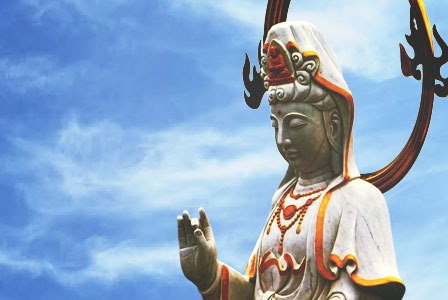
Buddhism originated in ancient India and was introduced to China via the Silk Road during the Han Dynasty. After long-term localization and integration with Confucianism and Taoism, it gradually developed into a unique Chinese Buddhist system and became one of the three major spiritual pillars of China.
Development & Main Schools
In the Wei, Jin, Northern and Southern Dynasties, Buddhism flourished rapidly. During the Sui and Tang Dynasties, it reached its golden age, with numerous temples and grottoes built across the country. After evolution, Chinese Buddhism formed several major schools, among which Chan (Zen) Buddhism is the most well-known. Zen emphasizes meditation, inner reflection and sudden enlightenment, integrating local philosophical thoughts and winning wide popularity among literati and ordinary people.
Core Beliefs
Buddhism advocates compassion, mercy, karma and reincarnation. It teaches people to let go of greed, anger and ignorance, to do good deeds and accumulate virtue, and to pursue spiritual peace and ultimate liberation. Religious activities such as scripture chanting, meditation and incense offering are commonly seen in Buddhist temples.
Most Famous Temples and Monasteries
China is home to countless time-honored Buddhist temples. The most renowned ones are collectively called the Four Great Buddhist Mountains:
- Mount Wutai (Shanxi): The sacred site of Manjushri Bodhisattva
- Mount Emei (Sichuan): The sacred site of Samantabhadra Bodhisattva
- Mount Putuo (Zhejiang): The sacred site of Avalokiteshvara (Goddess of Mercy)
- Mount Jiuhua (Anhui): The sacred site of Ksitigarbha Bodhisattva
Other iconic monasteries include Shaolin Temple (famous for Kung Fu), Lingyin Temple in Hangzhou and Giant Wild Goose Pagoda in Xi’an. These ancient buildings combine exquisite architecture, sculptures and religious culture, well worth a visit.
The Most Famous Buddhist Grottoes
Buddhist grotto art was introduced from India and Sinicized over time. Carved on cliffs, grottoes integrate architecture, sculpture and murals. The Four Great Grotto Groups are world-famous cultural heritage sites:
- Mogao Grottoes (Dunhuang, Gansu): Also known as the Caves of a Thousand Buddhas, celebrated for numerous exquisite murals and Buddha statues, a treasure of Silk Road artThe State Council Information Office of the People's Republic of China.
- Yungang Grottoes (Datong, Shanxi): Built in the Northern Wei Dynasty, featuring grand stone Buddha statues and a blend of Chinese and Central Asian artistic styles.
- Longmen Grottoes (Luoyang, Henan): Boasts well-preserved statues from the Northern Wei and Tang Dynasties, with elegant and delicate carving techniques.
- Maijishan Grottoes (Tianshui, Gansu): Distinct for a large number of clay sculptures with vivid expressions.
Top Buddha Statues
Across China, giant Buddha statues have become symbolic landmarks: the Giant Buddha of Leshan (the largest stone Buddha statue in the world), the Grand Buddha at Ling Shan in Jiangsu, and the Potala Palace Buddha statues in Xizang. These magnificent sculptures reflect superb ancient craftsmanship and devout religious faith.
Islam in China
Islam was introduced to China in the Tang Dynasty via maritime routes and the Silk Road. It now has a large number of believers mainly among several ethnic groups in northwest China, such as the Hui, Uyghur and Kazakh peoples.
Chinese Islam inherits classic Islamic doctrines while merging local living customs and architectural styles. Traditional mosques in China combine Arabic Islamic features with Chinese wooden structures, curved eaves and courtyard layouts. The most famous mosques include the Great Mosque of Xi’an and Niujie Mosque in Beijing. Religious festivals such as Eid al-Fitr and Eid al-Adha are grand celebrations for Muslim communities, featuring unique food, costumes and rituals.
Protestantism and Christianism
Catholicism and Protestantism were introduced to China in different historical periods. After long-term development, churches are distributed in cities across the country. Modern Chinese churches follow national religious policies and maintain independent religious activities. Classic European-style church architectures can be seen in many old towns and historic districts, which are popular photography spots and cultural landmarks. Major Christian festivals include Christmas and Easter.
About Chinese Culture
China’s festivals reflect its rich history and family-centric culture, from the vibrant Spring Festival to the serene Mid-Autumn Festival. Discover the traditions, customs, and travel tips for celebrating these key holidays.